In depth: robot vacuums explained
How we ranked the five robots
We do not test robot vacuums ourselves. Each model gets a score from 0 to 100 on six criteria: cleaning results, navigation, mopping, base station, owner reviews and price. The overall rating is a weighted average of those scores, calculated automatically, and the ranking follows that rating.
Cleaning results carry the most weight at 30 per cent because that is the core job. They come from Expert Reviews, which uses robots in real homes and runs rice, flour and pet hair spills on carpet and hard floors. Where Expert Reviews published detailed percentages, as for the Omni E25 and Saros 20 Neo, we use those. Where it gave only a star rating, we use the rating with a more cautious score.
Navigation, mopping, the base station and price each count for 15 per cent, and owner reviews for 10 per cent. Owner reviews come from Argos, where the X10 Pro Omni has 197 reviews and the Shark 237. Models without a verifiable UK review base get little or no credit on that criterion, which affects the Saros 20 Neo and the E20.
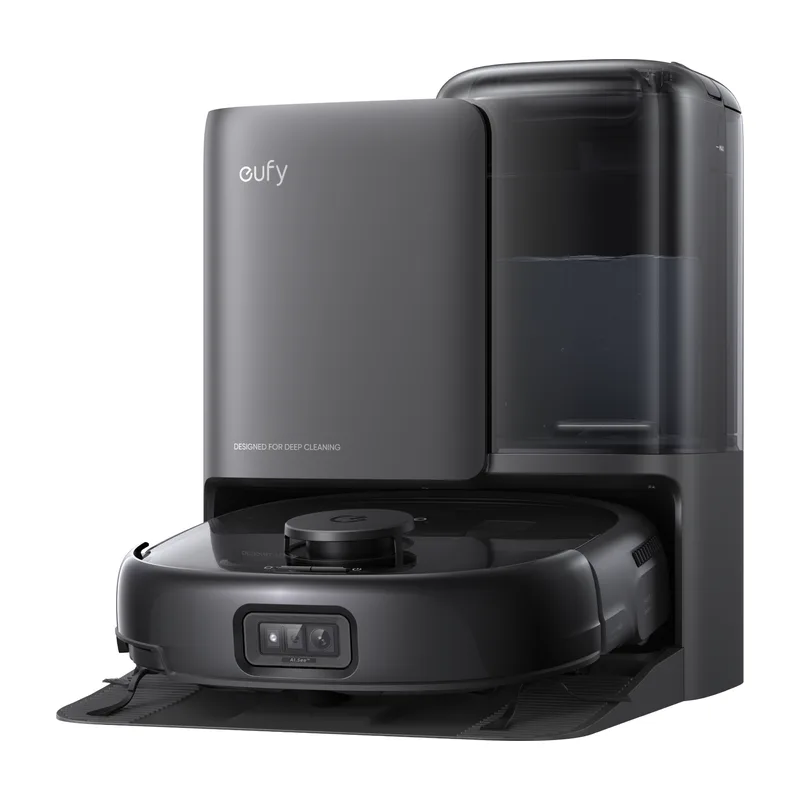
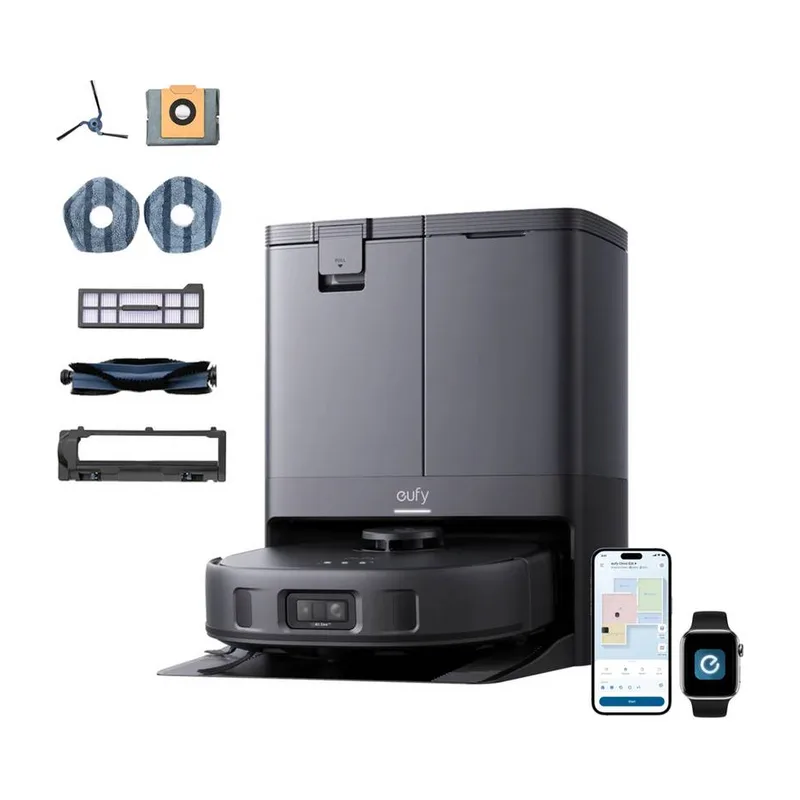
The X10 Pro Omni comes out on top because it scores well on every criterion without a weak spot: a full-service base, rotating mops, a strong owner record and a mid-range price. The Omni E25 cleans better according to Expert Reviews but costs more and has a thinner review base. Commission from retailers never affects scores or ranking.
Two robots score on very different grounds. The Saros 20 Neo leads on navigation and base features but loses points on cleaning consistency and owner reviews. The Shark loses points on mopping but gains them on price and owner reviews. The weighted rating balances these, so a robot that is outstanding at one thing but weak at another does not automatically top the list.
What Expert Reviews' results show, and where they stop
Expert Reviews' October 2026 roundup names the Eufy Omni E25 best overall, the Eufy E20 best value and the Roborock Saros 20 Neo best for object detection. It rates the Eufy X10 Pro Omni four out of five and the Shark Matrix Plus three out of five.
The detailed results reveal a pattern. Rice and pet hair are easy for modern robots, with results close to 100 per cent. Flour on carpet separates them: nearly 65 per cent for the E25 and 57 per cent for the Saros. On hard floor the Saros collected 94 per cent of flour, and much of what remained sat on the lip of the dustbin inlet.
The E20's 94 per cent figure in Expert Reviews' results was in cordless stick mode, not as a robot, so it does not compare directly with the others. Expert Reviews says the E20 is not the best in any single category but offers good value across them.
Expert Reviews' tests are made in reviewers' homes rather than a lab, so floor types, furniture and layouts vary. They are the most detailed free source for UK buyers, but small differences in percentages should not be read as precise. We treat them as a strong guide, not an exact measurement.
Expert Reviews also reports details that do not show up in the percentages: the Saros 20 Neo needed a threshold marked on the map before it would climb it, and the Omni E25's base reverses its brushes to free trapped hair. We include these where they affect daily use.
Owner reviews at Argos fill in some of the gaps. They show how the robots cope over weeks and months in many different homes, and they highlight problems such as noise and mopping quality that a single home test can miss. That is why owner reviews count for 10 per cent of the rating, and why we score robots without a UK review base more cautiously.
Which models we left out
Expert Reviews' roundup also includes the Eufy Omni S2, the Dyson 360 Vis Nav, the iRobot Roomba Combo 10 Max and Roomba J9+, the Lefant M210P and the EZViz RS2. We focused on five models that cover the main price levels and base types and that were in stock at UK retailers on the assessment date.
The Omni S2 scored very highly with Expert Reviews but costs considerably more than the Omni E25. The Dyson 360 Vis Nav is a premium model with no mopping. Budget robots without self-emptying bases, such as the Lefant M210P, are cheaper but require you to empty a small bin after every run, which most buyers now want to avoid.
We also considered the Eufy E20's mopping siblings and Shark's more expensive bases with mop washing, but did not find independent results for those exact models from a source we could use. When Expert Reviews or another free UK source publishes results, we will consider adding them.
We also looked for robot vacuums from Addrevenue advertisers in the UK, but found none in stock at a UK retailer with GBP prices on the assessment date. All buy links go to UK retailers or the manufacturers' own UK shops.
We will review the selection when new tests are published or prices change significantly.
For each excluded model, we checked whether it was in stock at a UK retailer with a GBP price and whether a free independent source had published results for exactly that model.
Robot or cordless stick vacuum?
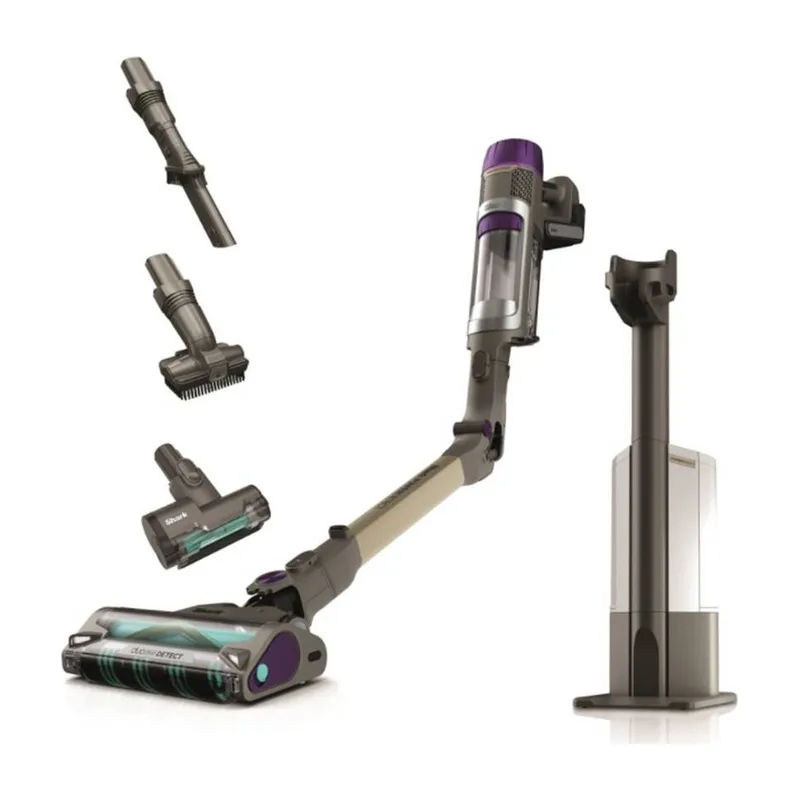
A robot vacuum and a cordless stick vacuum do different jobs. The robot keeps floors tidy on a schedule without you doing anything; the stick is for stairs, upholstery, car seats, corners and quick spills. Most homes benefit from both.
If you can only buy one, think about your floors and your routine. A home with mostly open hard floors and pets that shed suits a robot well. A home with lots of stairs, deep carpet or furniture close to the floor suits a stick vacuum better.
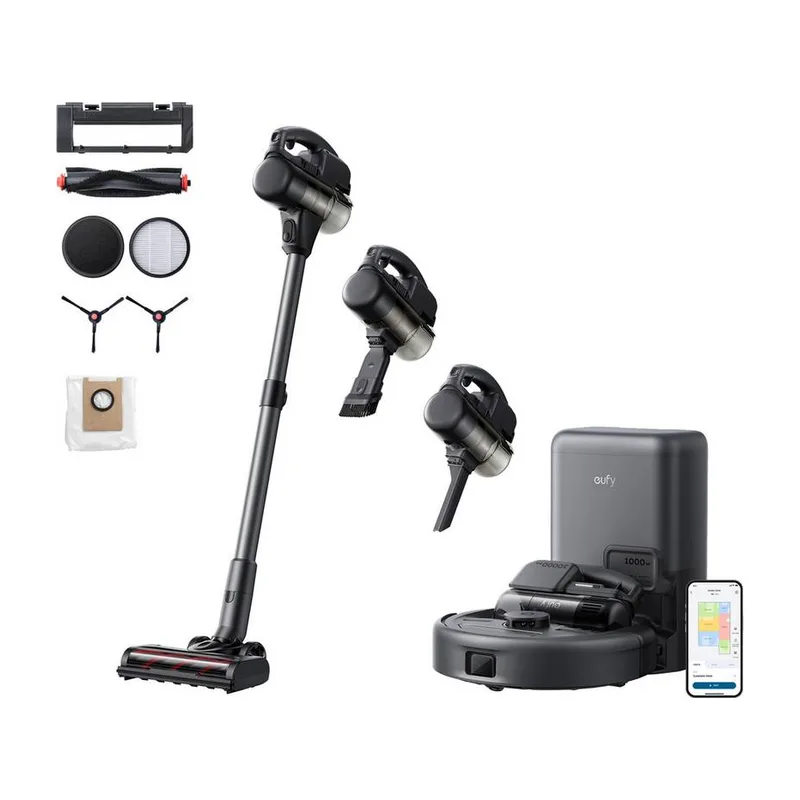
The Eufy E20 tries to cover both: it is a robot with a base that turns into a cordless stick and handheld vacuum. Expert Reviews measured 94 per cent pick-up in stick mode and named it best value, though it is not the best at any single job.
For deeper cleaning results with a separate stick vacuum, see our comparison of cordless vacuum cleaners, where the models are scored on Expert Reviews' pick-up results and Argos reviews.
Buying guide: choosing the right robot vacuum
Decide what you want the base to do
The base station is now the main thing that separates cheap and expensive robot vacuums. Every model in this comparison empties its own bin into the base, so you only deal with dust when a bag or bin in the base is full. That alone removes the daily chore that made early robots a nuisance, where you had to empty a tiny bin after every run.
The next step up is a base that also looks after the mop. The Eufy X10 Pro Omni, Eufy Omni E25 and Roborock Saros 20 Neo wash their mop pads or roller with clean water, collect the dirty water in a separate tank, dry the mop with heated air and refill the robot. Without drying, a damp mop pad left in a warm base can start to smell within days, so drying is worth having if you mop often.
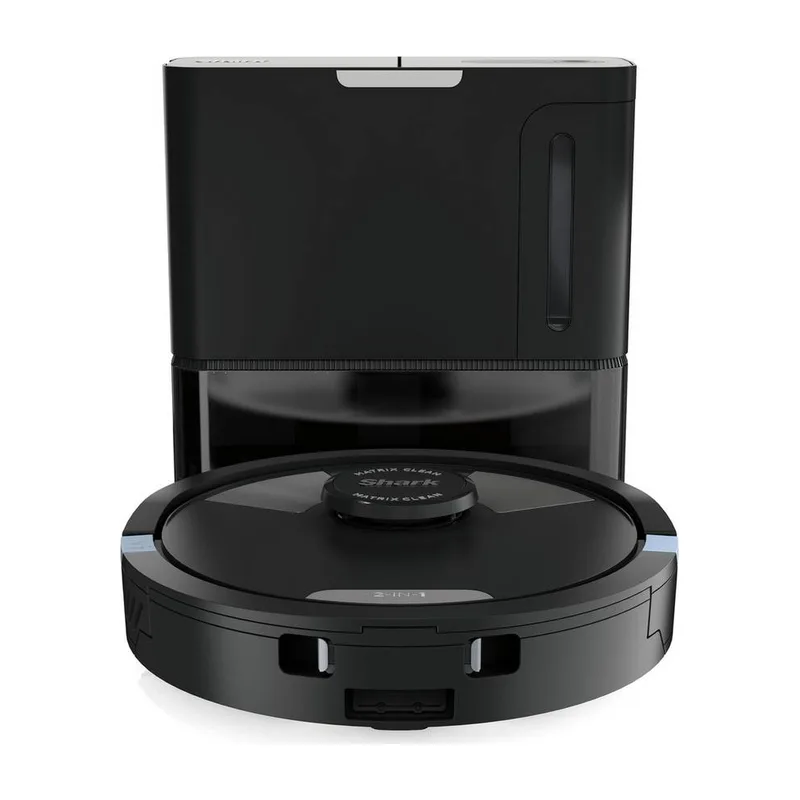
The Shark Matrix Plus has a self-emptying base but no mop washing. You fit and remove the mop pad by hand, and rinse it yourself. The Eufy E20 skips mopping entirely and uses its base for something else: the station turns into a cordless stick and handheld vacuum.
A full-service base costs more and takes up more space. Expert Reviews describes the Omni E25's base as large and bulky, and the Saros 20 Neo's base is also big. Measure the spot where it will live, and remember that the base needs clear space in front so the robot can dock, plus access for refilling the water tank.
If you mainly have carpet, a full mopping base adds cost without much benefit. If you have a large kitchen or hallway with hard floors, it can save real time every week.
A simple way to decide is to count how often you mop today. If it is once a week or less, a self-emptying base like the Shark's is enough, and you can mop by hand. If you mop several times a week, a base that washes and dries the mop takes over that job and is where the extra money goes.
Also think about who will look after it. A full-service base cuts the weekly work to changing water and, every couple of months, a bag. A simpler base means rinsing mop pads by hand, which many owners stop doing after a while, so the mop ends up unused.
Read cleaning results, not suction figures
Manufacturers quote suction in pascals, and the figures in this comparison range from 8,000 Pa for the Eufy X10 Pro Omni and E20 to 36,000 Pa for the Roborock Saros 20 Neo. These figures are measured by the manufacturers under their own conditions, and they do not translate directly into how much dirt the robot picks up.
Expert Reviews' results show why. The Saros 20 Neo has the highest rated suction here, yet Expert Reviews measured only 57 per cent of flour collected on carpet, compared with nearly 65 per cent for the Omni E25 with 20,000 Pa. Brush design, how well the robot seals against the floor and how it covers the room all matter as much as raw suction.
Fine dust in carpet is the hardest job for every robot. Rice and pet hair are much easier: Expert Reviews recorded close to 100 per cent for the Omni E25 and 100 per cent of rice for the Saros. If you have deep pile carpets, plan to use a stick or upright vacuum now and then, whichever robot you choose.
For that reason, our cleaning scores rely on Expert Reviews' published results and verdicts rather than the suction figures on the box. Where Expert Reviews gives only a star rating, as for the X10 Pro Omni and the Shark, we score more cautiously.
Runtime figures work the same way. Argos lists 67–215 minutes for the X10 Pro Omni, and the long end applies only on the lowest setting. Expert Reviews found the Omni E25 used 30 per cent of its battery on about 20 square metres, which gives a more realistic picture of how much floor a robot covers on one charge.
Mopping: rotating pads, rollers and static pads
Robot mops come in three broad designs. Static pads, like the one on the Shark Matrix Plus, are dragged across the floor and mainly spread a little water. They can pick up light dust and footprints but struggle with dried marks, and owners at Argos describe the Shark's mopping as basic.
Rotating pads, as on the Eufy X10 Pro Omni, spin and press down on the floor. Argos lists 180 rpm and 1 kg of downward pressure for the X10. This scrubbing action is better at stuck-on marks, and the pads lift 12 mm when the robot reaches carpet so rugs stay dry.
Roller mops, as on the Omni E25, use a rotating cylinder that is rinsed with clean water as it turns. Eufy says the E25 presses down with 1.5 kg. Expert Reviews found it removed most of a dried stain on linoleum but needed a scrubbing brush to finish.
No robot mop replaces a proper wash of a sticky floor. Expert Reviews found that the Saros 20 Neo handled mud and ketchup well but treated jam as a dry spill and smeared it. Think of robot mopping as daily maintenance that keeps hard floors from getting grimy, with an occasional manual clean for spills.
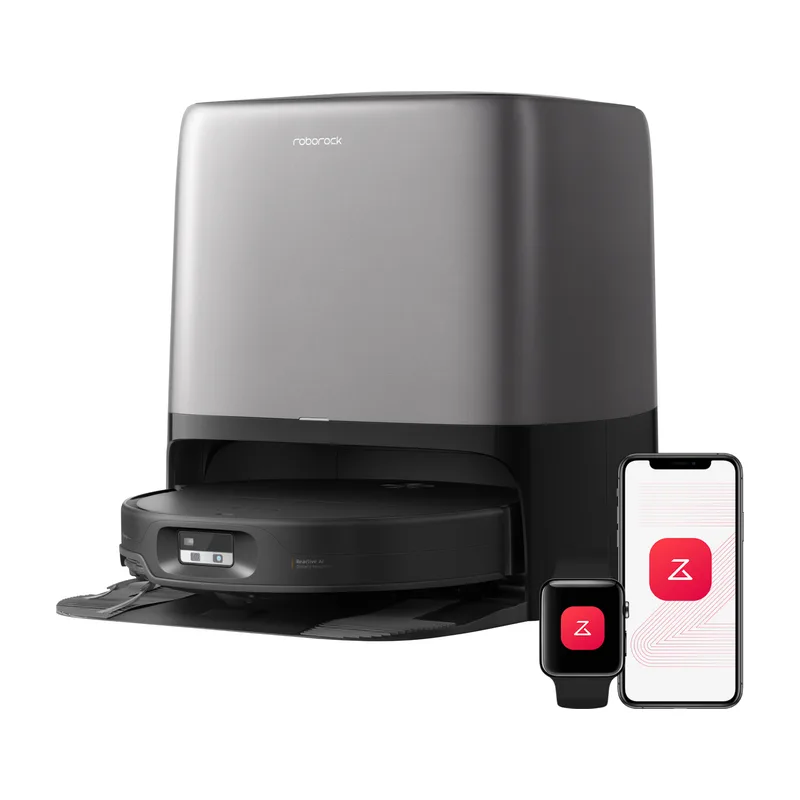
If you have rugs, check that the robot lifts or removes its mop on carpet. The X10 Pro Omni lifts its pads, and the Saros 20 Neo can leave its mop pads in the base, according to Roborock.
Navigation and obstacle avoidance
Every robot here maps your home with sensors, which lets you set no-go zones and clean single rooms from the app. The difference lies in how well they spot small objects such as socks, cables and pet bowls.
The Roborock Saros 20 Neo is Expert Reviews' pick for object detection. It uses AI cameras to recognise objects, pets and stains, and its LiDAR turret retracts so it can get under low furniture. It also climbs thresholds up to 4 cm, which helps in older homes with raised door frames.
For the other models our sources do not publish detailed obstacle tests, so we score them more cautiously. Whichever robot you choose, a quick tidy of cables and small items before a run improves results and reduces the risk of tangles.
Thresholds and rug edges are a common cause of robots getting stuck. If your home has steps between rooms, check the climbing height the manufacturer states and read owner reviews for complaints about getting stuck.
Good mapping also makes the robot faster. A robot that knows the layout cleans in straight lines room by room instead of bouncing around, which means shorter runs and less time with the base emptying. Our sources do not compare cleaning patterns directly, so look at owner comments about missed areas.
Running costs and upkeep
A self-emptying base needs bags, and mopping robots use pads or rollers, filters and side brushes that wear out. None of our sources lists the yearly cost of these parts, so check the price of replacement bags and pads before you buy.
Bag size gives a rough idea of how often you will change it. The Omni E25 and E20 use 3-litre bags, and Eufy says the E25's bag lasts about 75 days. Argos says the Shark's base holds up to 60 days of debris. Real intervals depend on your home, pets and how often the robot runs.
Mopping bases need clean water topped up and dirty water emptied. Expert Reviews lists a 2.5-litre clean water tank for the Omni E25. With daily mopping in a large home, expect to deal with the tanks every few days.
Hair wrapped around the brush is the most common maintenance job on any vacuum. The Omni E25's base reverses its carpet brushes to free trapped debris, and Expert Reviews found its anti-tangle design worked very well. Expert Reviews notes that the E20 lacks anti-tangle brushes, so expect to cut hair free more often if you have long-haired pets or people at home.
Keep the sensors and wheels clean too. Dust on the cameras or LiDAR can confuse navigation, and hair around the wheels can make the robot struggle on thresholds. A quick wipe every few weeks is usually enough, and the manufacturers' apps often remind you when parts are due for cleaning or replacement.
Noise and when to run the robot
Robot vacuums are quieter than most uprights while cleaning, but emptying into the base is loud. Expert Reviews measured 77 dBA from a metre away while the Saros 20 Neo's base emptied dust and dirty water. Argos reviewers give the Eufy X10 Pro Omni and the Shark low noise ratings and mention loud emptying.
The emptying cycle lasts only a short time, but it can wake light sleepers or startle pets. Schedule cleaning when you are out, or set a do-not-disturb period in the app.
Mop drying on the full-service bases can run for hours with a fan. Owners at Argos mention this for the X10 Pro Omni. If the base sits in a bedroom or open-plan living area, check whether the drying time and fan speed can be adjusted in the app.
Pets react differently to robots. Some ignore them, while others chase or avoid them. Running the robot when you are home for the first few times lets you see how pets react and lets you set no-go zones around food bowls and litter trays.
Price and when to buy
Robot vacuum prices move a lot. On the assessment date the Shark Matrix Plus was £269.99, well down from its £500 Argos list price, and the Eufy E20 was reduced to £499. Expert Reviews reviewed the Saros 20 Neo at £999, and it now costs £699.
Our price score uses the lowest price we found at a UK retailer on the assessment date. Because prices change often, the ranking can shift slightly after big sales, but cleaning results and base features matter more in our model than price.
Buying from a UK retailer gives you UK consumer rights, and Argos lists a two-year manufacturer's guarantee for the Eufy and Shark models here. Buying direct from Eufy or Roborock can be cheaper during promotions, but check the returns policy and who handles repairs.
If your budget is tight, the Shark covers daily vacuuming with a self-emptying base for less than half the price of the full-service models. If you mop a lot, the extra £329.01 for the X10 Pro Omni buys mop washing, drying and refilling.
Remember to count the cost of a separate stick vacuum if you need one for stairs and upholstery. The Eufy E20 includes that function in its base, which is part of why Expert Reviews named it best value.
Prepare your home for a robot
A robot vacuum works best in a home that suits it. Loose cables, phone chargers, socks and children's toys are the most common reasons for a robot to stop or get tangled. Even with good obstacle detection, as on the Saros 20 Neo, clearing the floor before a run gives better results.
Check the height under your sofa, beds and other furniture. A robot that fits underneath will clean the dust that collects there; one that does not will clean around it. The Saros 20 Neo's retractable LiDAR turret is designed to help it get under low furniture, according to Roborock.
Rugs with long tassels or deep pile can trap robots. Most apps let you mark rugs as no-go zones or tell a mopping robot to avoid them. Dark rugs can sometimes confuse cliff sensors, so watch the first few runs.
Place the base on a hard, level floor against a wall, with clear space in front and to the sides. Mopping bases need regular water changes, so a spot near a sink, such as a kitchen or utility room, is practical.
Let the robot map your home on its first run with all doors open. Once the map is saved, you can name rooms, set cleaning order and create schedules, which is where robot vacuums save the most time.