In depth: air fryers explained
What Expert Reviews' tests show, and where they stop
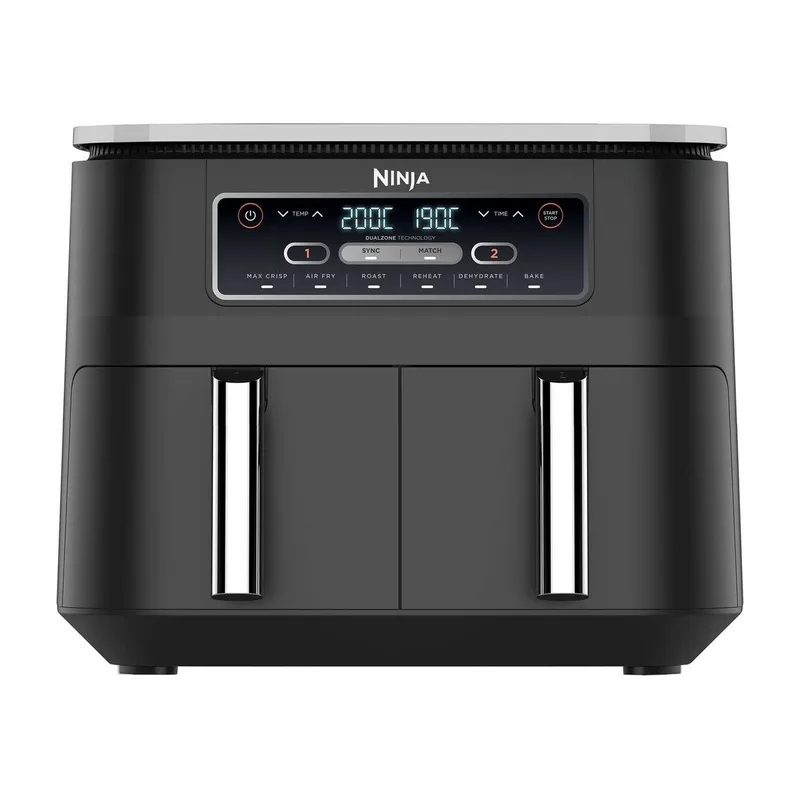
Expert Reviews cooked in every model in this comparison between April 2024 and August 2026, typically chips, chicken and one or two other foods per machine. Its findings give the cooking criterion most of its substance: the Philips stood out for chips and chicken, the Ninja AF300UK for speed on Max Crisp, the Instant for an even 25-minute batch of raw chips, and the Ninja Double Stack for roast potatoes but less even browning.
Those are useful but not standardised. Each review was written by one of three reviewers, at different times, with different foods, so a stronger verdict for one model does not prove it would beat another under identical conditions. That is one reason owner reviews carry weight in our model, and why the top three finish so close together.
Which? runs standardised lab tests on air fryers, including chips, cooking time and ease of use, but its scores and Best Buy list sit behind membership. We do not use them, and we do not use other sites' reports of them.
For buyers who want a lab verdict, a Which? membership gives access to its full results. Our comparison is designed to be useful without one, using only evidence that anyone can check for free.
Instant against Ninja AF300UK: running cost against review volume
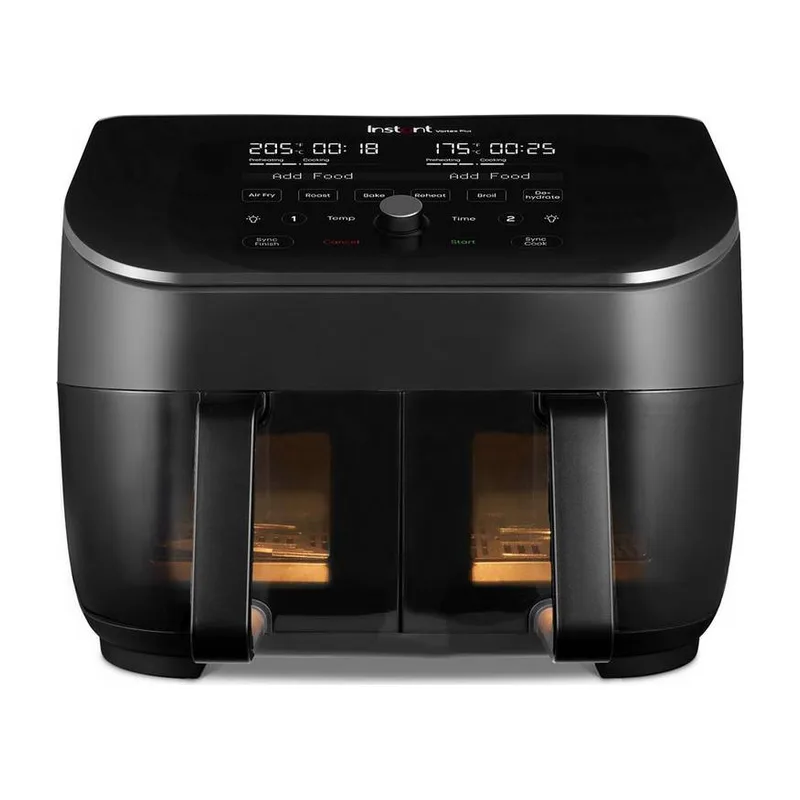
These two cost the same to within a pound and have the same 7.6-litre capacity, so the choice comes down to what you value. The Instant has a measured energy figure, viewing windows and lower power. The Ninja has more than 11,700 owner reviews, a two-year guarantee and the faster Max Crisp mode.
If you use an air fryer daily, lower running cost adds up over a year, and the Instant is the only dual model where that is backed by a measurement. If reliability over several years is your priority, the Ninja's huge review base and longer guarantee are more reassuring than any single test.
Either is a sound choice. Our ranking puts the Instant marginally ahead because it scores evenly across all six criteria, while the Ninja is held back mainly by the absence of energy data.
A third option is to wait for a sale: both models have frequently been discounted in the past, and the difference between them can swing either way from week to week.
Looking after the non-stick and the heating element
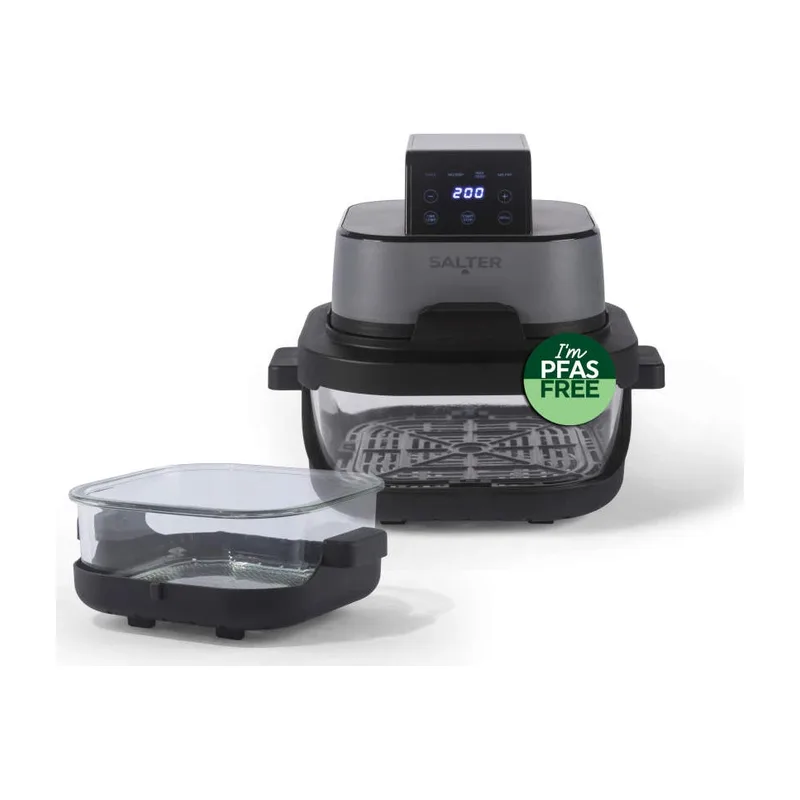
Most air fryer drawers are coated, and coatings wear faster with metal utensils and abrasive scourers. Manufacturers' dishwasher-safe labels mean the coating should survive a cycle, but hand washing with a soft sponge tends to keep it looking new for longer. Glass dishes like the Salter's avoid the issue.
Grease that builds up above the drawer, around the element, is the main cause of smoke and smells in older air fryers. Unplug the machine, let it cool and wipe the element area according to the manual. Philips' Steam Clean cycle helps with this on the 5000 Series.
Avoid aerosol oil sprays directly on coated baskets, which can leave a sticky residue. A light brush of oil on the food itself crisps it just as well.
Finally, check the seal on the drawer handle from time to time. A loose handle is a common wear point on heavily used drawers, and some manufacturers sell replacement drawers through their own shops.
Philips against Ninja Double Stack: two routes to cooking for a crowd
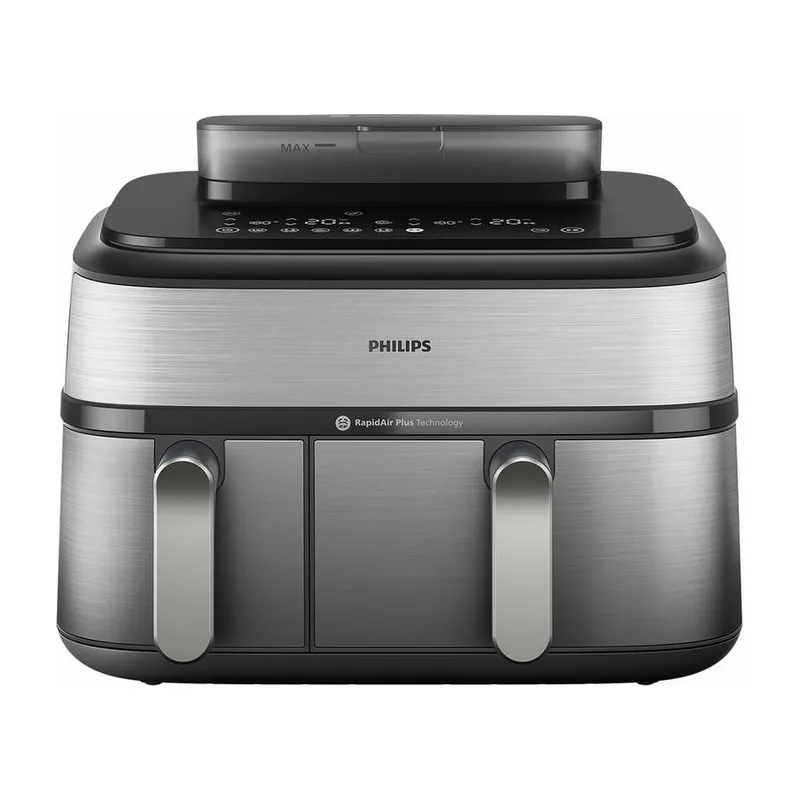
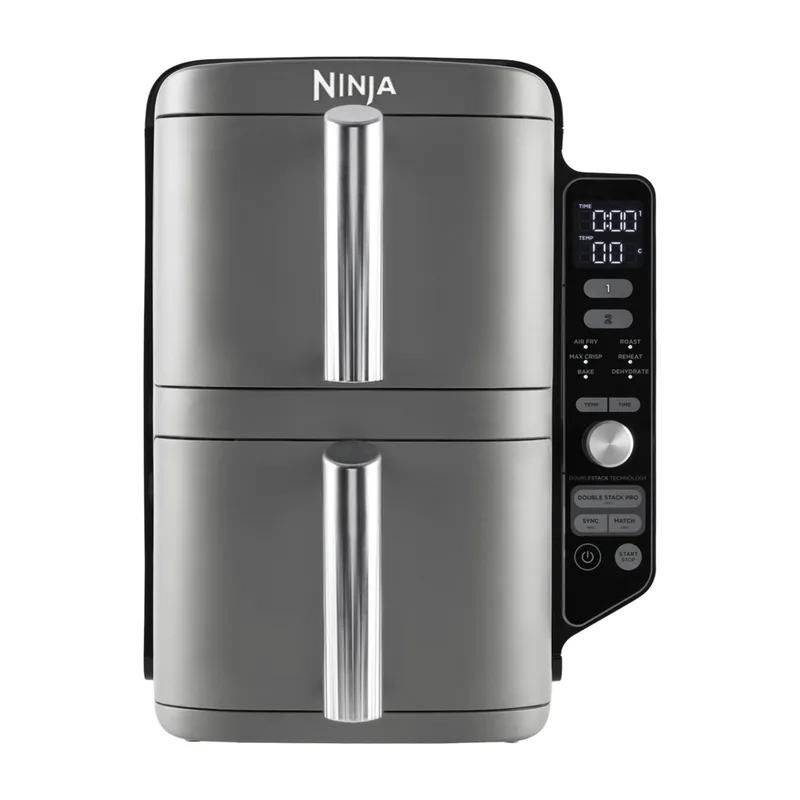
Both models are aimed at households of five or more, and both cost more than the dual-drawer models above them. They solve the capacity problem differently. The Philips makes one drawer large, at 6 litres, and adds a 3-litre second drawer. The Double Stack keeps two equal 4.75-litre drawers and adds racks, so you can cook on four levels.
The Philips suits cooks who roast whole birds or large joints, and Expert Reviews' results for chicken and chips favour it clearly. The Double Stack suits batch cooks who make several trays of the same thing, such as roast potatoes, which is where Expert Reviews' tester rated it highly. It also takes far less worktop width, 28 cm against 38.2 cm.
On price, the Double Stack was £10 dearer than the Philips on the assessment date, and on evidence the two differ in kind: the Philips has the stronger test verdict, the Double Stack the larger owner sample at 1,684 reviews against 42. For most large families, the Philips' cooking results make it the safer of the two, provided it fits under your cupboards.
Neither replaces an oven for a full Sunday roast for six with all the trimmings. Both are best used alongside the oven, taking over the potatoes or vegetables so the oven has room for the meat.
Buying guide: choosing the right air fryer
Two drawers matter more than total litres for most households
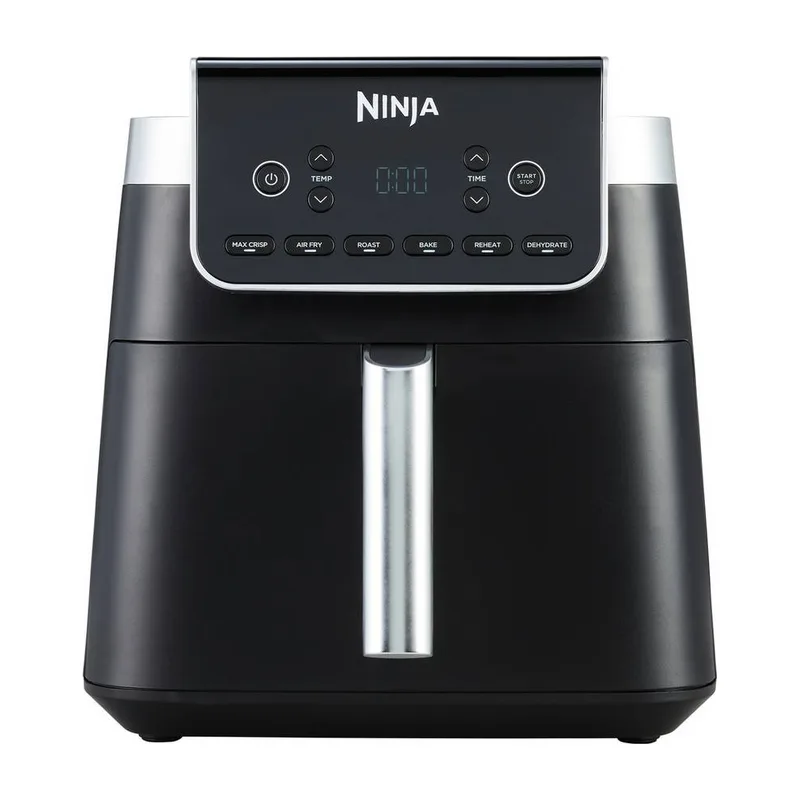
An air fryer's capacity figure tells you how much fits in, not how much you can cook well at once. Food needs space around it for the hot air to crisp it, and a drawer filled to the brim steams rather than fries. That is why a dual-drawer model with 7.6 litres split into two halves, like the Instant or the Ninja AF300UK, often feeds a family better than a single 6.2-litre drawer such as the Ninja Max Pro.
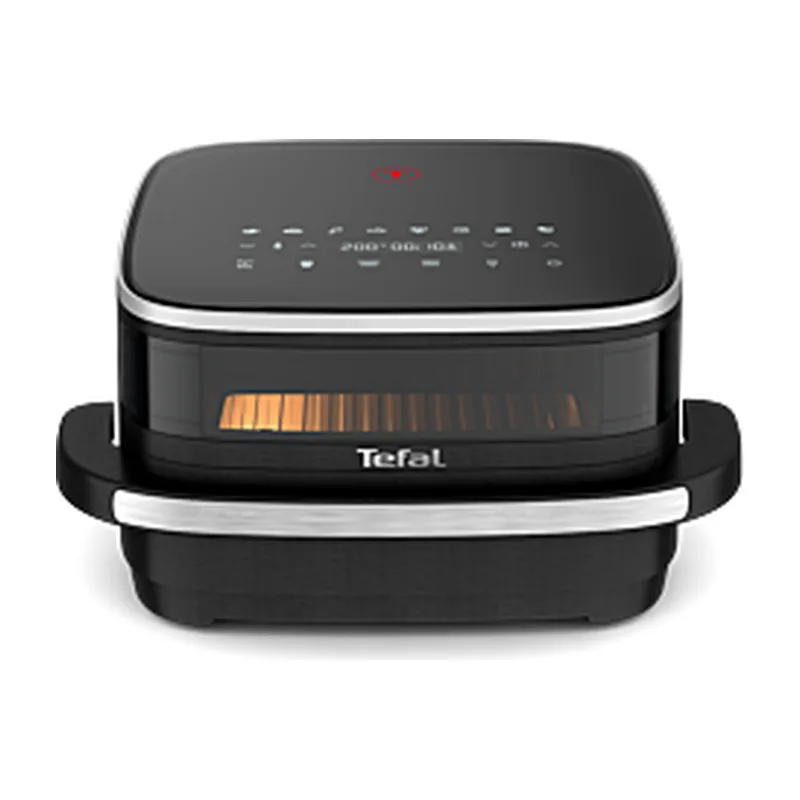
The real advantage of two drawers is cooking a main and a side at different temperatures and having them finish together. The Instant calls this Sync Finish, and Ninja has an equivalent. If you mostly cook one food at a time, such as chips for a sandwich or reheated leftovers, a single drawer does the job and costs less: the Tefal Easy Fry Pizza is £80 cheaper than the Ninja AF300UK.
Unequal drawers suit some cooks better. The Philips 5000 Series splits its 9 litres into 6 and 3, so a whole chicken fits in one side and vegetables in the other. Two equal 3.8-litre drawers, as on the AF300UK, are better for two portions of the same food.
When comparing models, look at the size of each drawer as well as the total, because a 3.8-litre drawer cannot take a whole chicken however large the combined figure.
In practice, two equal drawers are the most flexible arrangement for families who eat the same food, while unequal drawers suit cooks who often pair a large main with a small side. Think about the meals you cook most weeks before deciding which layout suits you.
Wattage is a ceiling, not a running cost
Air fryer power ratings range from 1,500 W on the Salter to 2,750 W on the Philips in this comparison. Higher power heats the cavity faster, but the element cycles on and off once the temperature is reached, so the rating does not tell you what a meal costs. Measured figures do.
Only two models here have a published energy measurement. Expert Reviews recorded 0.99 kWh for the Instant with both drawers at 200°C, and 0.48 kWh for the Salter running empty at the same temperature. Those tests were not identical, so do not compare the two figures directly, but they show that a compact machine uses roughly half the energy of a dual-drawer one under similar settings.
Power rating does matter in one practical way. A 2,750 W air fryer and a 3,000 W kettle on the same extension lead can exceed what the lead is rated for. If your kitchen is short of sockets, the 1,700 W Instant is easier to run alongside other appliances than the Philips.
If you are replacing an oven for small meals, even the most powerful air fryer here draws less than a typical electric oven element, and it heats a much smaller space.
Energy prices change, so rather than a fixed pence-per-meal figure, keep the measured kWh in mind: it stays valid whatever your tariff, and it lets you compare an air fryer with your oven using your own bills.
Count the parts you will wash, not the dishwasher symbol
Every model here lists dishwasher-safe drawers or baskets, so the label itself separates nothing. The difference is how many parts there are and whether they fit. The Ninja Double Stack has two deep drawers, two crisper plates and wire racks; the Tefal has one flat bowl and one grid.
Size against your dishwasher is the hidden issue. Expert Reviews found that the drawer of Ninja's large FlexDrawer model took up about two thirds of a full-sized dishwasher drawer, which is why we left that model out. The drawers on the AF300UK and Instant are small enough to sit on a normal rack.
Materials also play a part. The Salter cooks in glass dishes, which Expert Reviews found shed grease more easily than coated baskets. Philips' Steam Clean cycle loosens grease but, according to the same tester, does not finish the job on its own.
A quick rinse straight after cooking, while the grease is still soft, saves more effort than any cleaning feature.
Owners' reviews often mention cleaning more than cooking after the first few months, which suggests it is the part of daily use people notice most. A model that is easy to wash is more likely to be used every day.
Size on the worktop decides whether the air fryer stays out
An air fryer you have to lift out of a cupboard tends to be used less. Measure the gap between worktop and wall cupboards before buying, and allow clearance for the hot air vent at the back. The Ninja Double Stack is 38.5 cm tall and the Philips 44.3 cm, while the Tefal is under 20 cm and the Salter just under 30 cm.
Width is the other constraint. The Instant is 40.3 cm wide and the Philips 38.2 cm, against 28 cm for the Double Stack and the Ninja Max Pro. If your worktop is shallow but you have height, the Double Stack fits nearly 10 litres into the footprint of a single-drawer machine.
Weight matters if the fryer does live in a cupboard. The Double Stack weighs 10.3 kg according to Argos, nearly twice the Ninja Max Pro's 5.8 kg.
Air fryers also need a few centimetres of space at the back and sides for the vents, according to most manuals, so allow for that when measuring.
Remember that the drawer has to slide out fully, so you need clear space in front of the machine as well as above it. On a narrow galley worktop, a stacked or narrow model can be the only practical choice.
A bigger discount does not make a better buy
Air fryers are among the most heavily discounted kitchen appliances, and several models here were reduced on 14 November 2026. Argos showed the Philips down from £259.99 and the Double Stack down from £270. Those reductions make expensive models look like bargains, but the right comparison is between current prices, not against an old list price.
Measured against each other, the Instant and the Ninja AF300UK cost almost exactly the same, and both are cheaper than the single-drawer Ninja Max Pro on the same day. The Philips costs £20 more than the AF300UK for 1.4 extra litres, a steam function and stronger tester praise. Whether that is worth it depends on how many you cook for.
At the budget end, the Salter and the Tefal are only £5 apart. The Tefal's 178 owner reviews and larger basket are worth that difference for most buyers; the Salter makes sense mainly if you value glass dishes and the lowest running cost.
Price tracking sites can show how often a model is discounted, which tells you whether to wait for the next reduction or buy now.
A reasonable rule is to compare current prices from at least two retailers on the day you buy. Several models here had a price difference of more than £10 between shops during our research.
Guarantee length is a better signal than the number of presets
Presets save a few seconds of setting time and temperature, but every model here lets you set both manually. A longer guarantee is a more useful difference. Argos lists two years for the Ninja and Philips models, one year for the Instant, and Currys three years for the Salter if you register within 30 days.
Repairability counts too. Tefal lists 15-year repairability for the Easy Fry Pizza, meaning parts should be available for that long. Expert Reviews reports that Salter does not sell replacement parts for the Crisp & Go, so a cracked dish or failed tray means buying again.
If you plan to keep an air fryer for many years, those after-sales details are worth weighing alongside cooking results, especially for the cheaper models where a replacement part could otherwise cost a large share of the price.
Check whether registering the guarantee online is required, as Ninja and Salter tie their longer cover to registration.
Keep the receipt and the registration confirmation together. Guarantee claims for small appliances usually require proof of purchase, and the registration email is the easiest proof of the extended cover.
The best air fryer for one person is not a smaller family model
Single households often buy a big dual-drawer machine because it scores well, then use one drawer. The Salter and the Tefal are designed for one or two portions and use less energy doing it. The Salter's 1.5-litre dish is sized for a single portion, and its glass dishes go from fridge to fryer.
For two people, the Tefal's 4.5 litres or the Ninja Max Pro's 6.2 litres are enough for a main, while the dual-drawer models start to make sense when you regularly cook a separate side.
For four or more, two drawers of 3.8 litres or more are the sensible minimum. The Philips and the Double Stack suit households of five or six, according to Argos' portion guidance for the Philips.
Whatever the household size, it is better to cook in two batches than to overfill a drawer, which leaves food pale and soft.
If your household is likely to grow, buying one size up costs less than replacing a small fryer later, but only if the larger model fits your kitchen.