In depth: cordless vacuum cleaners explained
What Expert Reviews' home tests show, and where they stop
Expert Reviews' reviewers use each vacuum at home and run standard spills, including Cheerios, flour and rice, on carpet and hard floors. Its roundup, updated in June 2026, reports that the Dyson V15 Detect cleared every test, that the Shark PowerDetect matched it on the share of spills collected, and that the Shark ICZ300UKT collected all 26 g of Cheerios with 30 kPa of suction.
For the Henry Quick, the roundup gives measured suction of 11 kPa on full power and 4 kPa on low, and lists weak suction as a con. For the Dyson V10, it reports better pick-up than its predecessor over repeated use.
The roundup does not give noise figures, individual review dates or runtime measurements, so runtimes here are manufacturers' figures. And as with any single tester, results reflect particular homes and floors rather than a laboratory.
We also note that the roundup includes vacuums we did not select, such as the Dyson V15s Submarine, which adds a mop head. Wet-and-dry models are a separate choice, and we left them out to keep this comparison to vacuuming.
Expert Reviews' tests reflect what a careful household user sees, which is useful, but they are not designed to separate vacuums by small margins. That is why we combine them with owner reviews, where large samples reveal faults and frustrations that a single test cannot.
Shark PowerDetect against Dyson V15 Detect: convenience against cleaning
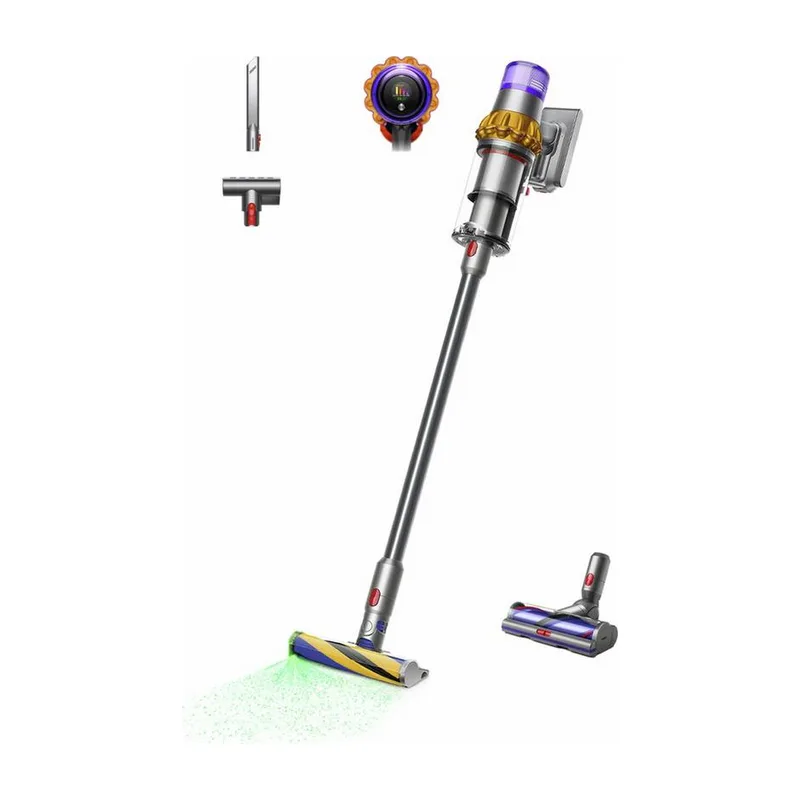
These two are the strongest cleaners in the comparison. The Dyson cleared every test; the Shark matched its share of spills collected with less suction. The difference lies around the cleaning itself.
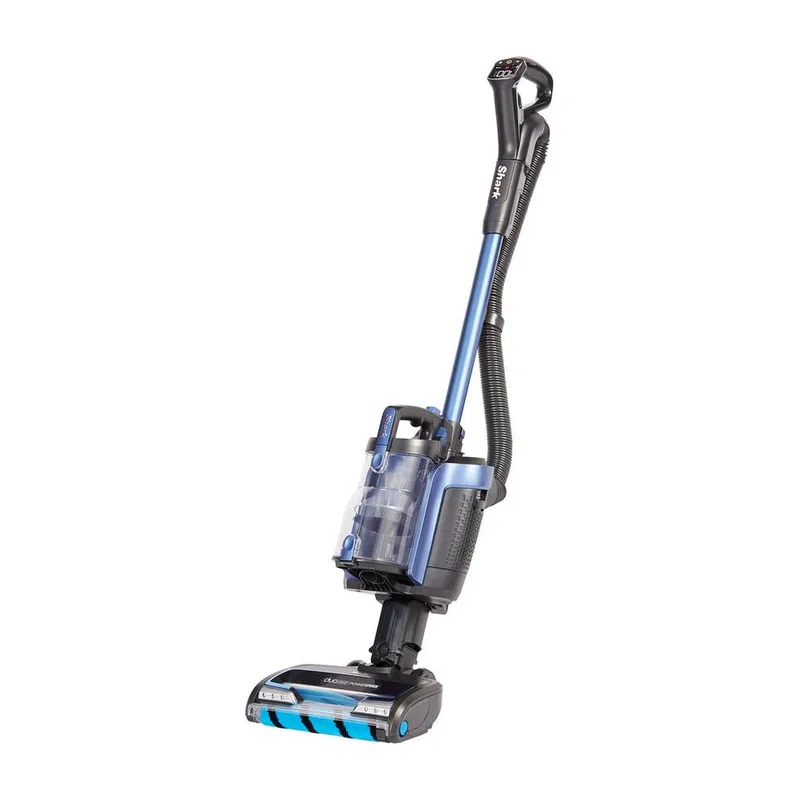
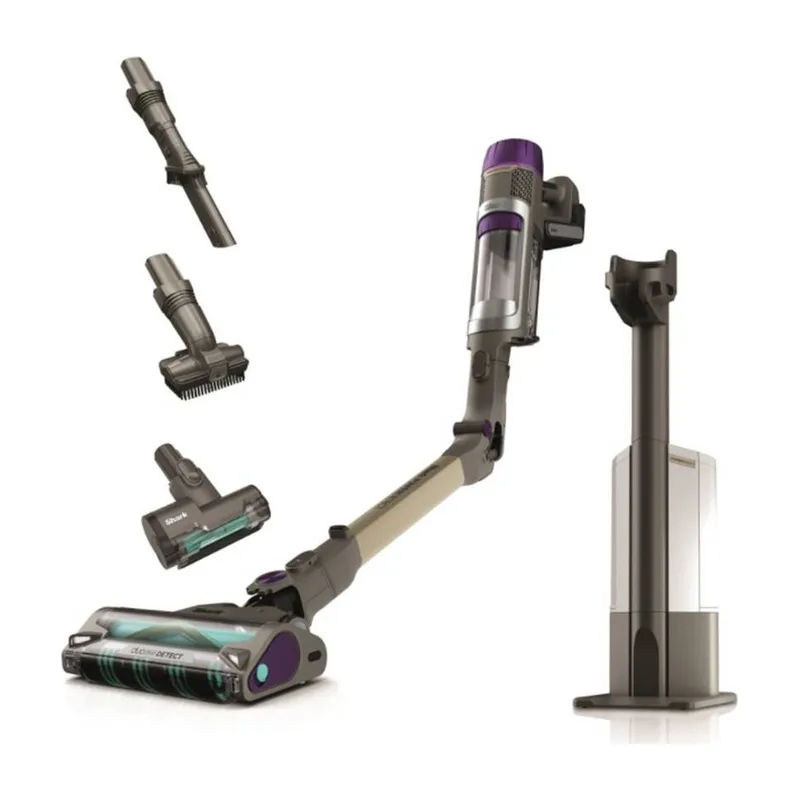
The Shark empties itself, charges on its base, runs up to 70 minutes and has a five-year guarantee. The Dyson is lighter at 3.1 kg against 3.71 kg, has a dust sensor and laser to show dirt on hard floors, and has a slightly higher owner average at Argos, but you empty it by hand and the guarantee is two years.
On the assessment date the Shark was £110 cheaper. For most households that makes the Shark the better value, which is why it tops our ranking. If you want the very best pick-up and a lighter stick, the Dyson is worth the extra.
A third factor is floor type. The Dyson's laser head is most useful on hard floors, where it shows fine dust, while the Shark's sensors raise power on carpets. Homes with mostly hard floors may lean towards the Dyson; homes with mostly carpet towards the Shark.
Both models are frequently discounted, so the price gap between them on any given day can change the answer.
Whichever you choose, register the guarantee straight away.
Looking after a cordless vacuum so the battery lasts
Empty the bin before it reaches the max line and wash or tap out the filters as the manual describes. A clogged filter reduces airflow, which makes the motor work harder and drains the battery faster.
Store the vacuum somewhere cool and dry, not in a hot conservatory or a cold garage, because extreme temperatures shorten battery life. Most manufacturers advise against leaving the battery completely flat for long periods.
Check the brush roll regularly for hair and threads, and clear the airways if suction drops suddenly. Many apparent faults are blockages in the wand or head.
If the vacuum cuts out early, check the filters and bin before blaming the battery. Most manufacturers explain in the manual how to diagnose a blockage, and a guarantee claim will usually start with those checks.
Finally, keep the charging contacts clean. Dust on the dock or the vacuum's contacts can stop it charging properly, which can look like a failing battery.
Henry Quick against Dyson V10: the budget choice depends on your floors
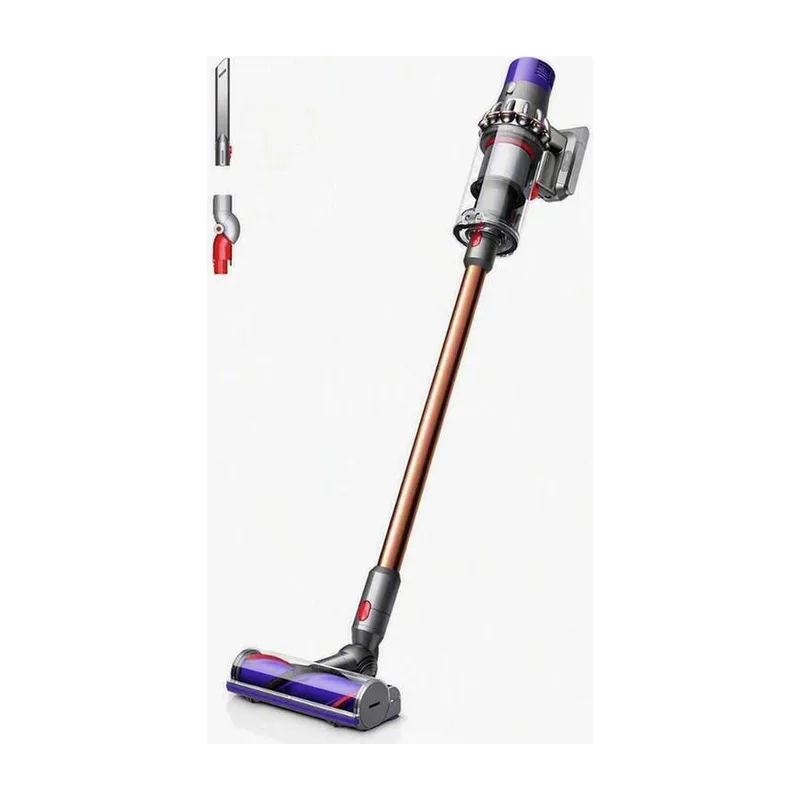
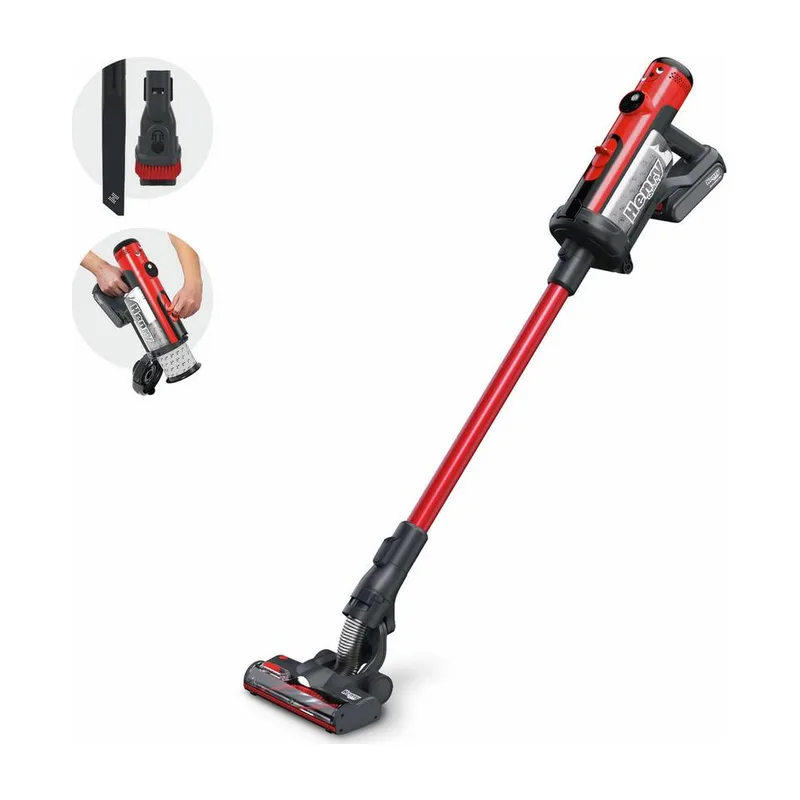
The Henry Quick and the Dyson V10 Cyclone are the two lower-priced choices here, and they suit different homes. The Henry costs £79.99 less, holds twice as much in its bin and has 697 Argos reviews averaging 4.7. The Dyson is lighter by over half a kilo and earned a Best Buy from Expert Reviews for its pick-up.
Expert Reviews measured only 11 kPa of suction on the Henry Quick and listed weak suction as a con, so for thick carpets the Dyson is the stronger cleaner. On hard floors and short-pile rugs, the difference matters less, and the Henry's larger bin and lower price come to the fore.
Runtime is a wash: both list up to 60 minutes, and both drop sharply on maximum power. The Henry charges faster, in about two and a half hours against four.
For a small flat with hard floors, the Henry is the better value. For a house with carpets, or for anyone who cleans a lot above floor level, the lighter Dyson is worth the extra.
Owners who already have a corded vacuum for occasional deep cleans can treat either as a quick daily cleaner, in which case the cheaper Henry Quick makes the most sense.
Both are sold widely, so it is worth checking whether either is discounted on the day you buy, as the price difference can move by tens of pounds.
Buying guide: choosing the right cordless vacuum cleaner
Pick-up results matter more than suction figures
Manufacturers often quote suction in air watts or kilopascals, and Expert Reviews measured some: 30 kPa for the Shark ICZ300UKT and 11 kPa for the Henry Quick. Suction alone, though, does not decide how much dirt a vacuum collects. Brush design, the seal between head and floor, and how the airflow is directed all play a part.
Kilopascals and air watts measure different things, and manufacturers choose whichever flatters their machine. Even independent suction figures, like Expert Reviews' 30 kPa for the Shark ICZ300UKT, describe the motor rather than what reaches the floor through a particular brush. That is why the cereal and flour tests are more telling.
That is why Expert Reviews' pick-up tests carry more weight in our model than suction figures. The Shark PowerDetect has less suction than the Dyson V15 Detect according to Expert Reviews, yet cleaned the same share of spills in its tests. The V15 cleared every cereal and flour test, which is the strongest result here.
For carpets, a motorised brush head that agitates the pile is essential, and every vacuum here has one. For hard floors, a soft roller helps with fine dust; Expert Reviews noted the absence of one as a downside on the Hoover HF9, which we left out because it was no longer available.
If your home is mostly hard floors with a few rugs, the gap between the models narrows, and handling and bin size may matter more than the last few points of pick-up.
Testers' pick-up results also depend on technique. Pushing slowly over a carpet lets any vacuum lift more, so the gap between models is largest when you clean quickly. If you vacuum in short daily bursts rather than one long weekly clean, a model with strong pick-up on a single pass saves the most time.
Edge cleaning is another practical difference. Testers often find that cordless heads miss a strip along skirting boards, and Expert Reviews noted that the Shark ICZ300UKT's main brush struggled in corners. A crevice tool fills the gap, but a head that cleans close to the edge saves a second pass.
Runtime claims are for the lowest setting
Every runtime figure in this comparison is a maximum, achieved on the lowest power with a non-motorised tool. On full power, runtimes drop sharply. Argos gives 14 minutes for the Henry Quick on its highest setting, and one owner reports 5 to 10 minutes for the Dyson V10 on maximum.
Boost modes are useful for a stubborn patch rather than a whole room. Using boost only where needed and the normal setting elsewhere is the simplest way to finish a clean on one charge.
For most homes, the normal or automatic setting is enough for daily cleaning, and the longer figures apply. Dyson's Detect models and Shark's PowerDetect adjust power automatically when they sense more dirt, which stretches the battery further.
The Shark PowerDetect's base charges the vacuum every time it docks, so it starts each clean full. With the others you need to remember to charge. A spare battery, which Dyson and others sell separately, doubles runtime for large homes.
Charging habits matter too. Leaving a vacuum on its charger between cleans is how most people use it, and every model here is designed for that. If you clean in one long session each week, look at the maximum runtime on normal power rather than the boost figure.
For a typical three-bedroom house, a full clean on the normal setting usually fits within the stated runtimes of 60 to 70 minutes here, provided you avoid using boost throughout.
A kilo makes a big difference once the vacuum leaves the floor
On the floor, the weight of a stick vacuum is mostly carried by the brush head. The moment you lift it to clean stairs, skirting boards or cobwebs, every gram is in your wrist. The Dyson V10 weighs 2.65 kg, the Shark PowerDetect 3.71 kg and the Shark ICZ300UKT upright 6.2 kg according to Expert Reviews.
Grip and trigger design matter too. Some Dyson models use a trigger you hold down while cleaning, while others switch on with a button. Owners with hand or wrist problems often prefer a button they can press once.
Balance matters as much as total weight. Stick vacuums with the motor and bin near the handle feel heavier when lifted than their weight suggests, which is why Expert Reviews lists even the V10 as heavy. Try lifting a vacuum in a shop before buying if you have wrist or shoulder problems.
An upright like the ICZ300UKT is easy to push across a large carpet because it stands on its own wheels, but it is the wrong choice for a house with lots of stairs.
Also consider where the vacuum will live. Wall-mounted docks keep a stick vacuum off the floor and ready to grab, while an upright or a self-emptying base needs floor space. Measure the cupboard or corner before choosing.
For anyone who cleans mainly floors, weight matters less than how easily the head swivels around table legs and under low furniture, which is where owner reviews are most informative.
Self-emptying bases are the biggest practical upgrade in years
Emptying a small cyclone bin over the kitchen bin is the least pleasant part of owning a cordless vacuum, and dust tends to escape. The Shark PowerDetect's base sucks the dirt out after every clean and stores up to 45 days' worth, according to Argos.
Allergy sufferers often find emptying the worst part, because fine dust escapes as the bin opens. A self-emptying base reduces that contact, though we make no claim about health effects; anyone with allergies should look at the manufacturer's filtration details.
That convenience comes with costs. The base needs floor space and a socket, it adds to the price, and some bases use bags that need replacing. Check the running costs for the base before buying.
Without a base, bin size decides how often you empty. The Henry Quick's 1 litre holds twice as much as the Dyson V10's 0.5 litres, which matters with pets or a large home.
A practical middle ground for people without a self-emptying base is to empty the bin straight into a bag held around it, which keeps most of the dust in. Some owners of the Dysons do this to avoid a cloud of fine dust over the kitchen bin.
For homes without space for a base, a model with a larger bin, such as the Henry Quick, is the next best way to reduce how often you empty.
Pet hair calls for an anti-tangle brush, not just more suction
Long hair, human or animal, wraps around brush rolls and slows them down. Shark's anti hair wrap technology and Dyson's detangling heads are designed to stop that. Expert Reviews listed the lack of an anti-tangle head as a downside of the Henry Quick.
Shark's anti hair wrap design uses a comb that lifts hair off the roller as it spins, and Dyson's detangling heads use cone-shaped rollers that push hair off the end. Both aim to stop hair winding round the brush, and owners of both brands report that they mostly work, though neither is perfect with very long hair.
If you have a long-haired dog or cat, or long-haired people in the house, give this feature more weight than our model does. The two Shark models in this comparison are both marketed for pets.
Even with anti-tangle heads, check the brush roll now and then and cut away any wrapped hair. It keeps the brush spinning freely and protects the motor.
Brush rolls also wear. Shark and Dyson sell replacement heads and rollers, which is worth checking if you have a heavily shedding pet and expect to use the vacuum daily.
Pet owners should also check whether a mini motorised tool is included, because pet hair on sofas and car seats is where most of the extra cleaning happens.
Guarantees range from two to five years, and batteries are the reason it matters
Lithium-ion batteries lose capacity over time, and in a cordless vacuum that means shorter runtimes after a few years. A longer guarantee protects you if the battery fails early. Both Shark models here come with five years, the Shark ICZ300UKT on condition of registration within 28 days. The Dysons and the Henry Quick have two years.
Battery replacement prices vary by brand and model, and some batteries click out without tools while others need a screwdriver. Owners who plan to keep a vacuum for many years should look for one with a user-replaceable battery.
Replacement batteries are sold by most manufacturers, and some models let you swap them yourself. Before buying, check whether a replacement battery is available and what it costs, because that is the main repair you are likely to need.
Register the guarantee on the day you buy. Manufacturers often require it within a set number of days.
Shark's five-year cover is also worth weighing when comparing prices: over five years, a battery replacement on a two-year model could close much of the price gap between them.
Dyson and Shark both sell spare parts through their own websites, which makes long-term repairs more practical than for lesser-known brands.
The cheapest vacuum here is the right buy for smaller homes
For a flat or small house with mostly hard floors, the Henry Quick at £180 offers a large bin, a short charge time and an excellent owner record. Its weak suction matters most on thick carpets, where the Dysons and Sharks pull ahead in Expert Reviews' tests.
For a larger home with carpets and pets, the Shark PowerDetect's self-emptying base and long runtime justify its price for most buyers. The Dyson V15 Detect is for people who want the strongest results in Expert Reviews' pick-up tests and are happy to empty the bin themselves.
Families with young children may value a large bin and a light stick most, because spills are frequent and the vacuum comes out several times a day. In that case, the Henry Quick's bin or the Dyson V10's low weight may be worth more than the top pick-up scores.
The Dyson V10 sits between them: lighter than any other model and a Best Buy at Expert Reviews, at £110 less than the Shark PowerDetect.
If you are unsure, start from your floors: thick carpets favour the stronger pick-up of the Dyson V15 and Shark PowerDetect, while hard floors and short rugs let the Henry Quick or Dyson V10 do the job for less.
Accessories decide whether a cordless replaces your old vacuum
A crevice tool, a dusting brush and a small motorised head for upholstery cover most cleaning around the house. Most cordless vacuums include them, and Dyson's Absolute packs add more. Check what is in the box before comparing prices, because the same vacuum can be sold with different tool sets.
A low reach adaptor, included with the Dyson V10 at Argos, bends the wand to reach under beds and sofas without kneeling. For homes with a lot of low furniture, it saves real effort.
Wall docks and storage stands are the accessories people miss most. A vacuum that is easy to reach gets used more often, which matters more than any difference in suction between the models here.
Finally, think about how you will store the tools. Clip-on tool holders keep the most used ones on the wand, so you are less likely to leave them in a drawer.