Product comparisons built on facts 10 comparisons, open criteria and named sources

ProductPick

Best air purifier 2026

The Blueair Blue Max 3250i is our top pick: Expert Reviews measured fast particle clearing and low noise, it has an app and automatic mode, and 112 Argos reviews average 4.7 at £170. The Dyson Big+Quiet Formaldehyde suits very large rooms but costs £900. The Philips PureProtect Mini 900 is the best value at £99.99. The ranking combines independent measurements, owner reviews and specifications.

We don't test the products ourselves. The scores are based on manufacturer information, independent tests and customer reviews, weighted by open criteria. How we compared

Blueair Blue Max 3250i

Our top pick

Blueair Blue Max 3250i

7.9out of 10

Suits you if you want a quiet, smart purifier for a living room or bedroom up to 48 m².

  • Fast particle clearing in Expert Reviews' test
  • Quiet, with a night mode
  • App, automatic mode and air quality light
£170 at ArgosView price at Argos

More recommendations

The ranking: all 5 air purifiers

  1. 1Our top pickBlueair Blue Max 3250iSuits you if you want a quiet, smart purifier for a living room or bedroom up to 48 m².7.9out of 10£170View price at Argos
  2. 2Best for large roomsDyson Big+Quiet Formaldehyde BP04Suits you if you need to clean the air in a very large or open-plan space and price is not the main concern.7.5out of 10£900View price at Argos
  3. 3Best valuePhilips PureProtect Mini 900Suits you if you want a simple purifier for a larger room without an app or setup.7.4out of 10£99.99View price at Argos
  4. 4Lowest filter costsShark NeverChange5 HP150UKSuits you if you want to avoid buying replacement filters for years and can accept more noise.7.4out of 10£249View price at Harvey Norman
  5. 5Best for bedroomsBlueair Blue Pure 511Suits you if you want a small, quiet and cheap purifier for a bedroom or study.6.8out of 10£99View price at Argos

An air purifier pulls room air through a filter that traps particles such as dust, pollen and smoke. All five purifiers here use HEPA filters, and Expert Reviews measured how fast each brought fine particles (PM2.5) back down after spraying a test aerosol into a small room. The fastest results were under two and a half minutes for the Dyson and the Blueair Blue Max 3250i, and just over three and a half minutes for the Blueair Blue Pure 511. The bigger differences are in room size, noise and running costs. The Dyson is rated for rooms up to 100 m², the Blue Pure 511 for 38 m². Filters on most models need replacing every six to twelve months, while Shark says its NeverChange5 filter lasts up to five years. Size the purifier for your room, and check the price of replacement filters before you buy. For most homes, a mid-range purifier sized for the main living room or bedroom gives the best balance of cleaning, noise and cost.

Every model in detail

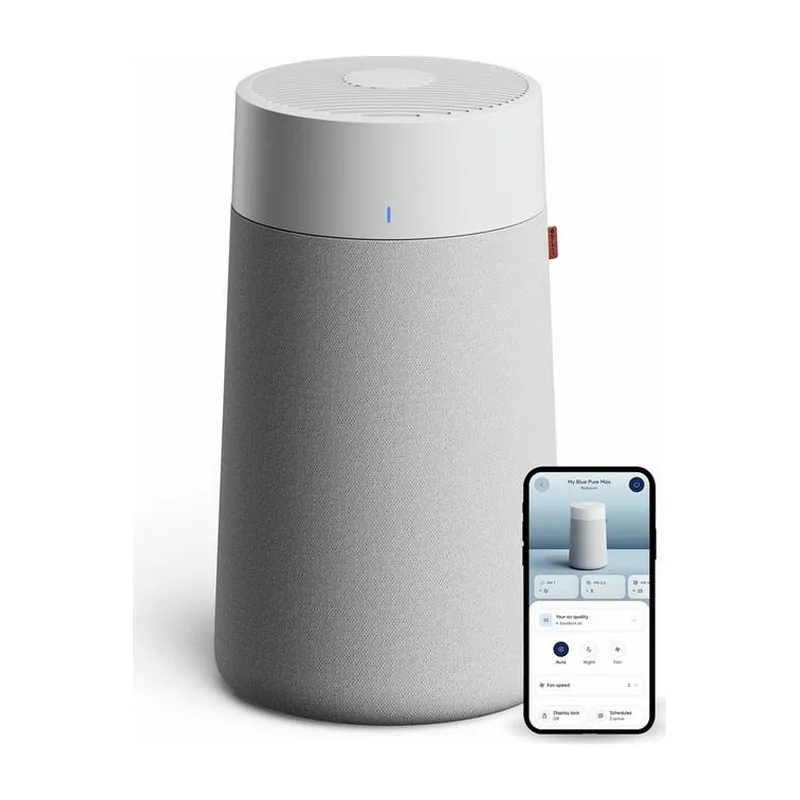
Blueair Blue Max 3250i

Rank 1 of 5Our top pick

Blueair Blue Max 3250i

7.9out of 10

Suits you if you want a quiet, smart purifier for a living room or bedroom up to 48 m².

£170 at Argos, 14 November 2026View price at ArgosPrices change, so please check the price with the retailer.

The Blue Max 3250i combines fast particle clearing with low noise and smart features at a mid-range price. Expert Reviews measured PM2.5 falling from 395 to 25 µg/m³ in 2 minutes 23 seconds, the highest starting level of any model here, and noise from 27.6 to 49 dB. Its automatic mode reacted within two or three seconds, and 112 Argos reviews average 4.7.

Running costs are its weak point. Argos sells the replacement filter for £35, and an Argos answer says it needs changing about every six months with continuous use. Expert Reviews also found the filter a chore to replace.

Pros

  • Fast particle clearing in Expert Reviews' test
  • Quiet, with a night mode
  • App, automatic mode and air quality light

Cons

  • Filters cost about £35 each
  • Filter is a chore to replace, according to Expert Reviews

How the score was calculated

  • Particle clearing (30 %)82/100
  • Noise (15 %)85/100
  • Room size (10 %)70/100
  • Running costs (15 %)60/100
  • Features (10 %)90/100
  • Owner reviews (10 %)92/100
  • Price (10 %)70/100
Read the full assessment of Blueair Blue Max 3250i
Particle clearing82/100

Expert Reviews measured PM2.5 falling from 395 to 25 µg/m³ in 2 minutes 23 seconds. Only the Dyson was faster, from a much lower starting level. Argos lists a CADR of 239 m³/h for smoke, pollen and dust. Expert Reviews describes the filtering as powerful.

Noise85/100

Expert Reviews lists 27.6 dB at the lowest setting and 49 dB at the highest, among the quietest results here. A night mode runs the fan at its lowest speed with the lights off, which suits bedrooms. Several Argos owners mention it is noisy on the highest setting, which matches Expert Reviews' 49 dB figure, but the low settings suit night use.

Room size70/100

Argos and Expert Reviews list rooms up to 48 m², enough for most UK living rooms and bedrooms but less than the Philips, Shark and Dyson. For a typical UK living room of 15 to 25 m², that leaves plenty of headroom to run it on a quiet setting.

Running costs60/100

Argos lists the replacement filter at £35, and an Argos answer suggests changing it every six months with continuous use, which adds up to about £70 a year. Power use is low, from 3 to 19 W in Expert Reviews' measurement. A washable fabric pre-filter helps extend the main filter's life.

Features90/100

Five fan settings, an automatic mode driven by a PM2.5 sensor, an air quality light that changes from blue to red, Wi-Fi app control with scheduling and Alexa voice control. Expert Reviews found the voice commands awkward.

Owner reviews92/100

112 Argos reviews average 4.7, with 96 per cent recommending it, the strongest owner record here. Some owners mention noise at high speed and the cost of filters. The summary of owner reviews at Argos describes it as effective and quiet, with app control.

Price70/100

£170 at Argos on 14 November, with a two-year guarantee. That makes it £730 cheaper than the Dyson, which cleared particles a little faster in Expert Reviews' test but from a much lower starting level.

Dyson Big+Quiet Formaldehyde BP04

Rank 2 of 5Best for large rooms

Dyson Big+Quiet Formaldehyde BP04

7.5out of 10

Suits you if you need to clean the air in a very large or open-plan space and price is not the main concern.

£900 at Argos, 14 November 2026View price at ArgosPrices change, so please check the price with the retailer.

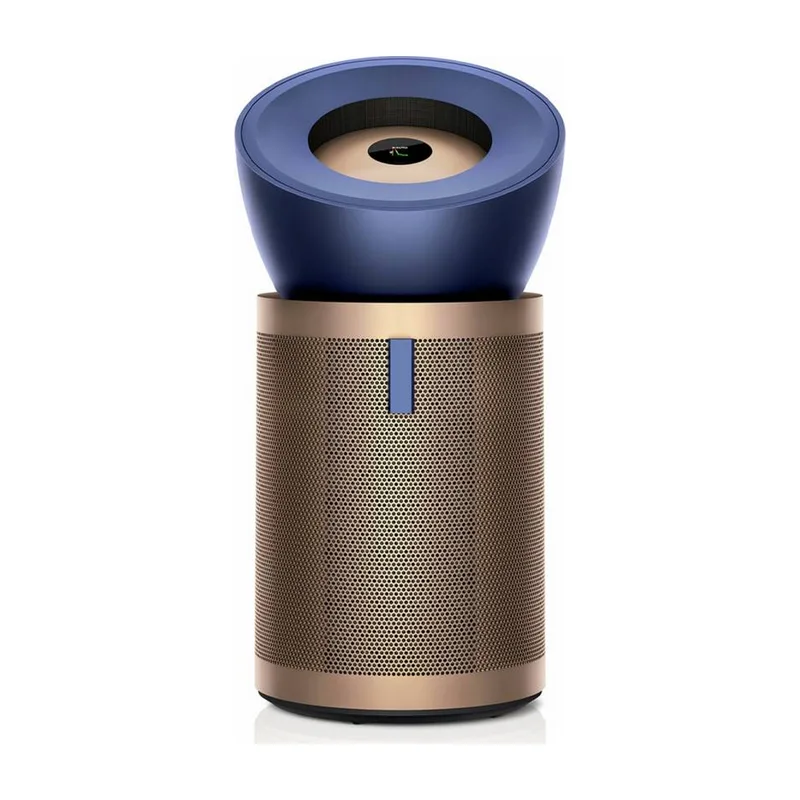
The Big+Quiet is Expert Reviews' best buy and its air purifier of the year. It cleared PM2.5 from 140.7 to 25 µg/m³ in just under 140 seconds, the fastest time here, ran from 32 to 53 dBA, and is rated for rooms up to 100 m². It also measures CO2, temperature and humidity, and its fan can cool a room in summer.

It is very large, weighing 11.9 kg, and at £900 from Argos it costs over five times as much as our top pick. Replacement filter prices are not stated in our sources.

Pros

  • Fastest particle clearing in Expert Reviews' test
  • Rated for rooms up to 100 m²
  • CO2, temperature and humidity sensors

Cons

  • Very expensive
  • Very large and heavy at 11.9 kg
  • Filter prices not stated

How the score was calculated

  • Particle clearing (30 %)90/100
  • Noise (15 %)85/100
  • Room size (10 %)100/100
  • Running costs (15 %)50/100
  • Features (10 %)95/100
  • Owner reviews (10 %)75/100
  • Price (10 %)10/100
Read the full assessment of Dyson Big+Quiet Formaldehyde BP04
Particle clearing90/100

Expert Reviews measured PM2.5 falling from 140.7 to 25 µg/m³ in just under 140 seconds, the fastest time here, though from a lower starting level than the Blueair 3250i. Dyson says it targets formaldehyde, gases and fine particles, but Expert Reviews measured only particles.

Noise85/100

Expert Reviews measured 32 dBA at the lowest setting and 53 dBA at the highest. Given its size and airflow, Expert Reviews calls it quiet. Argos owners give noise two out of five, though several call it quiet in their comments. For its size, that is low, and several Argos owners describe it as quiet.

Room size100/100

Rated for rooms up to 100 m², the largest here, which makes it suitable for open-plan living areas. For a single bedroom or small living room, it is far more than you need.

Running costs50/100

It has replaceable HEPA and carbon filters with a replacement indicator, but no source we used states their price. Its size suggests higher running costs than the compact models, so we give it a cautious score.

Features95/100

Ten fan speeds, automatic and night modes, and sensors for CO2, temperature, humidity and pollutants, according to Expert Reviews. The fan can provide cooling airflow up to 2.6 m/s. Argos owners are divided on the display and app. Expert Reviews describes it as easy to use, and its fan doubles as a cooling fan in summer, which adds value if you would otherwise buy a separate fan.

Owner reviews75/100

19 Argos reviews average 4.7, with 88 per cent recommending it. Owners praise its performance but warn about the space it takes up. One owner notes that the fan feels cool but does not lower the room's temperature, and works best with a window open.

Price10/100

£900 at Argos on 14 November, with a two-year guarantee. It is by far the most expensive purifier here. Unless you have a very large room or want the extra sensors and fan, the Blueair 3250i offers better value.

Philips PureProtect Mini 900

Rank 3 of 5Best value

Philips PureProtect Mini 900

7.4out of 10

Suits you if you want a simple purifier for a larger room without an app or setup.

£99.99 at Argos, 14 November 2026View price at ArgosPrices change, so please check the price with the retailer.

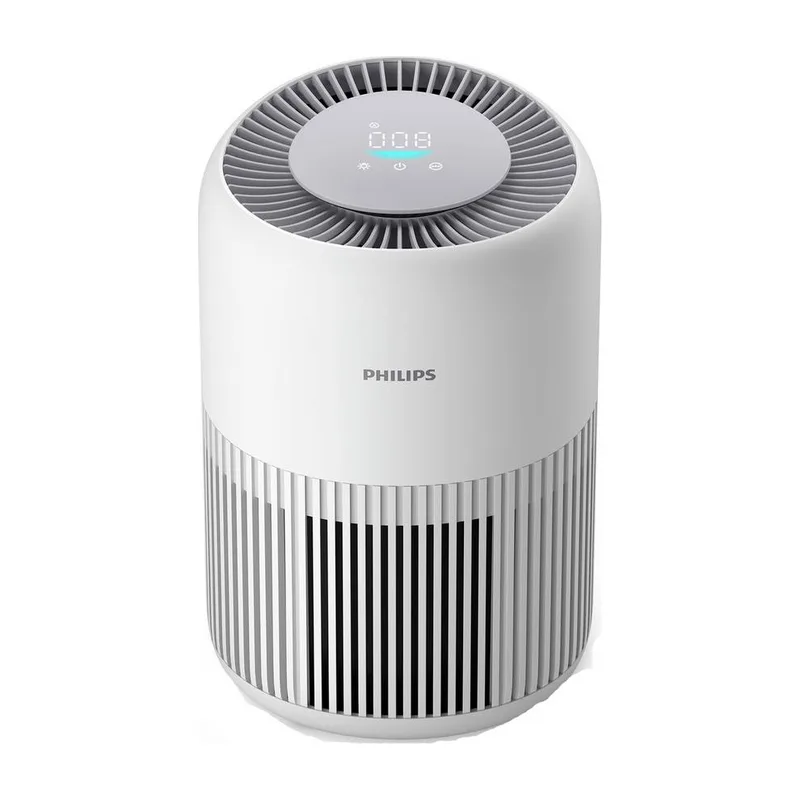
The PureProtect Mini 900 offers the most room coverage for the money. Argos lists a CADR of 250 m³/h and rooms up to 65 m², and Expert Reviews measured PM2.5 back to 25 µg/m³ in 195 seconds. It is ready to run, with a PM2.5 display and colour indicator, and 90 Argos reviews average 4.5. It costs £99.99 at Argos.

It has no app or Wi-Fi, and Expert Reviews notes the lack of advanced features. Argos lists several model numbers for it, though the specifications match the model Expert Reviews tested.

Pros

  • Large room coverage for the price
  • Simple to set up and use
  • PM2.5 display and automatic mode

Cons

  • No app or Wi-Fi
  • No measured noise figure
  • Unclear model number at Argos

How the score was calculated

  • Particle clearing (30 %)70/100
  • Noise (15 %)70/100
  • Room size (10 %)85/100
  • Running costs (15 %)75/100
  • Features (10 %)55/100
  • Owner reviews (10 %)85/100
  • Price (10 %)90/100
Read the full assessment of Philips PureProtect Mini 900
Particle clearing70/100

Expert Reviews measured 195 seconds to bring PM2.5 down to 25 µg/m³, slower than the Blueair 3250i and Dyson but faster than the Blue Pure 511. Its CADR of 250 m³/h is the highest stated for the models with a CADR here. For rooms at the upper end of its range, it will take longer to clean the air than in Expert Reviews' small test room.

Noise70/100

Expert Reviews does not give a noise figure. Argos lists 20.5 dB in sleep mode, while owners rate noise 1.8 out of 5, so we give it a middling score. Argos quotes 20.5 dB in sleep mode, a very low figure for a purifier of this capacity.

Room size85/100

Rated for rooms up to 65 m², more than the two Blueair models and close to the Shark's 60 m². That makes it a good choice for a large living room on a budget.

Running costs75/100

Argos says the HEPA filter lasts up to a year, and the washable pre-filter needs cleaning every couple of weeks, according to an owner. Power use is 21 W at most, according to Argos. Filter prices are not stated.

Features55/100

Four fan settings, a PM2.5 display and a coloured air quality band, but no Wi-Fi, Bluetooth or app, according to Expert Reviews. Owners praise its automatic mode. For buyers who want a purifier that simply works, the lack of an app is an advantage rather than a drawback.

Owner reviews85/100

90 Argos reviews average 4.5, with 90 per cent recommending it. Complaints mention dust still being present, no printed manual and filter availability. Owners praise its quiet running, cleaning performance and automatic mode, according to the Argos review summary.

Price90/100

£99.99 at Argos on 14 November, reduced from £139.99, with a two-year guarantee. Argos lists it as the Philips Series 900, with model numbers AC0920 and AC0950 both mentioned on the page.

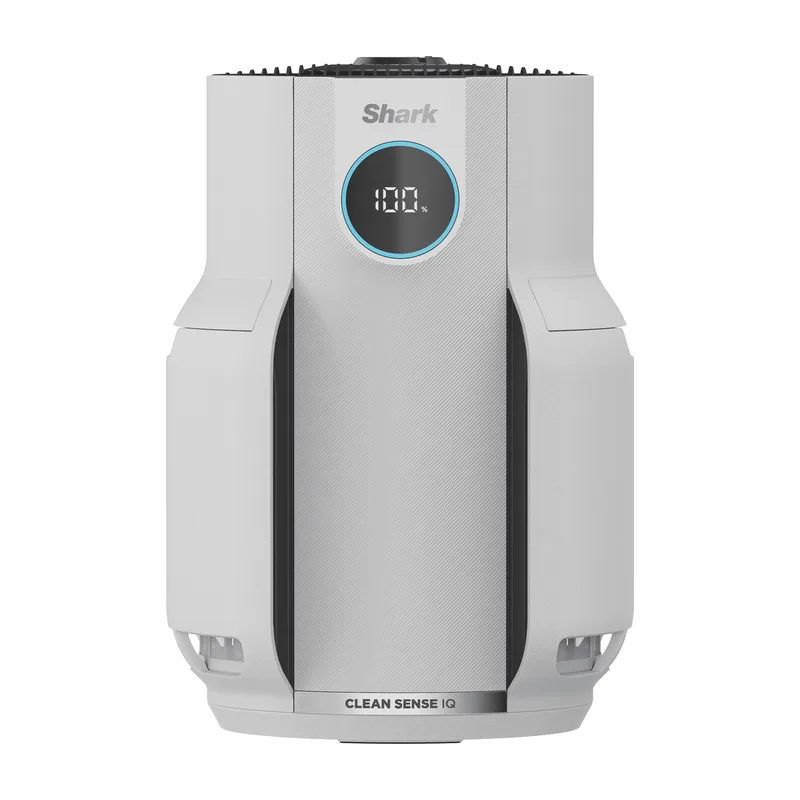
Shark NeverChange5 HP150UK

Rank 4 of 5Lowest filter costs

Shark NeverChange5 HP150UK

7.4out of 10

Suits you if you want to avoid buying replacement filters for years and can accept more noise.

£249 at Harvey Norman, 14 November 2026View price at Harvey NormanPrices change, so please check the price with the retailer.

The NeverChange5's selling point is its filter: Shark says the cleanable HEPA filter lasts up to five years, which could save a lot compared with models whose filters need replacing every six to twelve months. Expert Reviews measured 2 minutes 34 seconds to clear particles at full power, and it is rated for rooms up to 60 m². Wayfair shows 193 reviews averaging 4.6.

Expert Reviews found it noisier than the others and notes that the five-year claim is not yet verified. At £249 from Harvey Norman it costs £79 more than the Blueair 3250i.

Pros

  • Filter lasts up to five years, according to Shark
  • Rated for rooms up to 60 m²
  • Good particle clearing

Cons

  • Noisier than the others according to Expert Reviews
  • Five-year filter claim not yet verified
  • Out of stock at Shark on the assessment date

How the score was calculated

  • Particle clearing (30 %)75/100
  • Noise (15 %)55/100
  • Room size (10 %)85/100
  • Running costs (15 %)95/100
  • Features (10 %)70/100
  • Owner reviews (10 %)85/100
  • Price (10 %)50/100
Read the full assessment of Shark NeverChange5 HP150UK
Particle clearing75/100

Expert Reviews measured 2 minutes 34 seconds at full power and 3 minutes 27 seconds in automatic mode. It lists a CADR of 147.8 m³/h, lower than the Blueair and Philips. In automatic mode, which most people use day to day, it took almost a minute longer.

Noise55/100

Expert Reviews lists noise as its main con and found it noisier than the other purifiers it tested, so it scores lowest here alongside its strong cleaning. If you plan to use it in a bedroom, run it on a low setting or choose a quieter model.

Room size85/100

Rated for rooms up to 60 m², according to Expert Reviews. Shark's own site gives 60 m² at one air change per hour and 12 m² at 4.8 air changes per hour, which shows how room size claims depend on assumptions.

Running costs95/100

Shark says the HEPA filter can be cleaned and lasts up to five years, and Expert Reviews calls it good filter value while noting the claim has not yet been verified. That earns it the top running costs score. If the claim holds, it could save the cost of eight or more replacement filters over five years compared with a purifier needing six-monthly changes.

Features70/100

It has an automatic mode, which Expert Reviews timed at 3 minutes 27 seconds. Expert Reviews does not detail sensors or app features in its roundup, so it gets a middling score.

Owner reviews85/100

Wayfair shows 193 reviews averaging 4.6, while Shark's own site shows a lower average of 3.3 without a count. We give it a good but not top score. The gap between the two review averages makes us cautious, so we would like to see more UK retailer reviews.

Price50/100

£249 at Harvey Norman on 14 November. Shark's own site listed it at £279.99 but out of stock that day. Factoring in filter savings, its higher purchase price may balance out over several years.

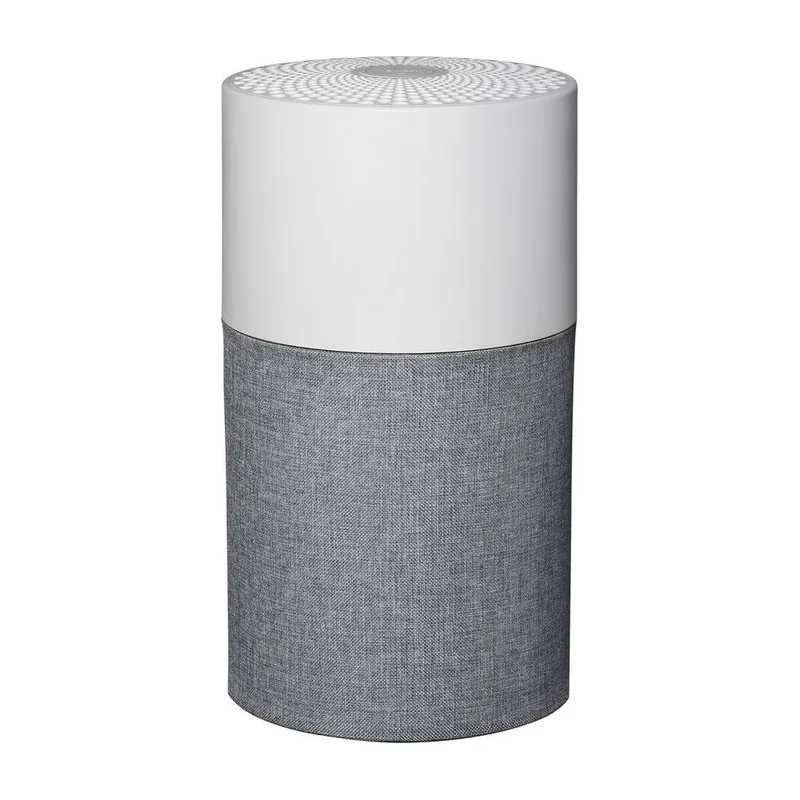
Blueair Blue Pure 511

Rank 5 of 5Best for bedrooms

Blueair Blue Pure 511

6.8out of 10

Suits you if you want a small, quiet and cheap purifier for a bedroom or study.

£99 at Argos, 14 November 2026View price at ArgosPrices change, so please check the price with the retailer.

The Blue Pure 511 is Expert Reviews' pick for bedrooms. It is compact at 1.9 kg, almost silent at low settings and peaks at 47 dBA, and its controls are just a power button and a fan button. 136 Argos reviews average 4.5, and it costs £99 at Argos.

It is the slowest here: Expert Reviews measured just over three and a half minutes to clear the test spray. It is rated for rooms up to 38 m² and has no automatic mode or app.

Pros

  • Very quiet at low settings
  • Compact and light at 1.9 kg
  • Cheapest purifier here

Cons

  • Slowest particle clearing here
  • No automatic mode or app
  • Smallest room size rating

How the score was calculated

  • Particle clearing (30 %)60/100
  • Noise (15 %)85/100
  • Room size (10 %)60/100
  • Running costs (15 %)65/100
  • Features (10 %)40/100
  • Owner reviews (10 %)85/100
  • Price (10 %)90/100
Read the full assessment of Blueair Blue Pure 511
Particle clearing60/100

Expert Reviews measured just over three and a half minutes to clear the test spray and notes it is not as fast as some rivals. Argos lists a CADR of 191 m³/h, the second lowest here. In a bedroom within its rated size, that is still quick enough to keep the air clean on a continuous low setting.

Noise85/100

Expert Reviews describes the lower settings as almost silent and measured up to 47 dBA at full speed. Owners rate noise 1.8 out of 5 at Argos, probably reflecting the top setting. That makes it the best choice here for light sleepers on a budget.

Room size60/100

Rated for rooms up to 38 m², the smallest here, which suits bedrooms, studies and small living rooms. For a bedroom of 10 to 15 m², it has more than enough capacity.

Running costs65/100

An Argos answer says filters need replacing every six to nine months, and power use is 16 W at most, according to Argos. Filter prices are not stated in our sources. The included filter set has a carbon layer for light odours, according to Argos.

Features40/100

Three fan speeds and a filter replacement indicator. There is no automatic mode, sensor or app, which several Argos owners mention. For a bedroom, where you mainly want quiet, steady cleaning, these simple controls may be all you need. Expert Reviews' verdict is that it is quiet, compact and cost effective, which sums up its appeal.

Owner reviews85/100

136 Argos reviews average 4.5, with 89 per cent recommending it. A few owners report problems with the controls. Many owners describe it as quiet and easy to use, according to Argos.

Price90/100

£99 at Argos on 14 November, with a two-year guarantee, the cheapest purifier here. It costs £71 less than the Blueair 3250i, which adds an app, sensor and faster clearing.

All air purifiers side by side

Click a column heading to sort.

Blueair Blue Max 3250iBlueair Blue Max 3250i7.9£1702 min 23 s (395 to 25 µg/m³)48 m²27.6–49 dB
Dyson Big+Quiet Formaldehyde BP04Dyson Big+Quiet Formaldehyde BP047.5£900Just under 140 s (140.7 to 25 µg/m³)100 m²32–53 dBA
Philips PureProtect Mini 900Philips PureProtect Mini 9007.4£99.99195 s (to 25 µg/m³)65 m²20.5 dB in sleep mode
Shark NeverChange5 HP150UKShark NeverChange5 HP150UK7.4£2492 min 34 s (full power)60 m²not stated
Blueair Blue Pure 511Blueair Blue Pure 5116.8£99Just over 3.5 min38 m²Up to 47 dBA

In depth: air purifiers explained

How we ranked the five purifiers

We do not test air purifiers ourselves. Each model gets a score from 0 to 100 on seven criteria: particle clearing, noise, room size, running costs, features, owner reviews and price. The overall rating is a weighted average calculated automatically, and the ranking follows that rating.

Particle clearing counts for 30 per cent and rests on Expert Reviews' measured times and the stated CADR. Noise and running costs count for 15 per cent each, and room size, features, owner reviews and price for 10 per cent each.

Running costs are scored on how often filters need replacing, their price where known, and power use. Where the filter price is not stated in our sources, we score cautiously rather than guess, which affects the Dyson and Philips.

The Blueair 3250i wins because it scores well on everything: fast clearing, low noise, smart features and the strongest owner reviews, at a mid-range price. Its main weakness is filter cost. The Dyson cleans fastest and covers the largest rooms but is held back by its price.

Below the top two, the Philips and Shark are almost level. The Philips scores on price, room size and owner reviews, the Shark on filter life and particle clearing. If filter costs matter most to you, the Shark may be the better buy despite its rank.

The Philips, Shark and Blue Pure 511 each lead on one point: room coverage for the money, filter life and quietness at a low price respectively. Commission from retailers never affects scores or ranking.

What Expert Reviews' tests show, and where they stop

Expert Reviews first uses each purifier at home against everyday particles such as wood smoke, pollen and pet dander, then runs a standardised test: five seconds of test aerosol in a small room, with an air quality meter recording how long particles take to return to normal. It also measures noise at several settings and power use.

The test is a useful comparison of how quickly each purifier reacts. But starting levels varied from about 140 to about 395 µg/m³ across the models here, so a direct ranking by time alone would be misleading. We also consider CADR and Expert Reviews' written verdicts.

Expert Reviews does not measure gases, odours or formaldehyde, even though the Dyson is designed to target them. Our scores therefore cover particle removal only.

Expert Reviews' roundup also has a few inconsistencies, such as two model numbers for the Philips. Where figures conflict, we note it and use the figure that matches other sources.

Owner reviews at Argos add information about reliability, noise in real homes and filter availability. We read them alongside Expert Reviews' measurements but give them less weight, since owners cannot measure particle levels precisely.

Taken together, the measurements, CADR figures and owner reviews give a consistent picture: the Blueair 3250i and Dyson clean fastest, the Philips covers the most room for the money, and the Blue Pure 511 is the quietest budget choice.

Which models we left out

Expert Reviews' roundup also includes the Hoover H-Purifier 500, Blueair Blue Signature and Levoit Sprout, and mentions the Levoit Core 300S.

The Hoover H-Purifier 500 is a Best Buy at Expert Reviews, but we could only find it out of stock or as a refurbished unit at UK retailers on the assessment date. The Levoit models were available mainly through Amazon marketplace listings we could not verify.

The Blueair Blue Signature is sold in several sizes, and we could not confirm which size Expert Reviews tested, so its measured results could not be matched to a product at a UK retailer.

We also left out Shark's smaller NeverChange5 Compact Pro, sold at Argos, because Expert Reviews tested the larger HP150UK, and the two have very different room size ratings and CADR.

We also searched for air purifiers from Addrevenue advertisers in the UK but found none. All buy links go to UK retailers.

We will review the selection when Expert Reviews updates its roundup or when the excluded models return to stock at UK retailers.

Do you need an air purifier at all?

For many homes, good ventilation and regular cleaning keep indoor air in a reasonable state without a purifier. A purifier makes most sense where outdoor air is polluted, near busy roads, during wildfire smoke or high pollen periods, in homes with wood stoves or heavy cooking, or where pets shed a lot.

A cheap air quality monitor can show whether particle levels in your home are actually high before you spend money on a purifier. Several purifiers here, including the Blueair 3250i, Philips and Dyson, have built-in sensors that show the same information once you have one.

Outdoor pollution data can help you decide. Local air quality forecasts show when particle levels are high, which is when a purifier with the windows closed makes the most difference indoors.

If you decide to buy, start with the room where you spend most time, usually the bedroom or living room. Size the purifier for that room and run it continuously on a low or automatic setting.

Avoid purifiers that produce ozone, which some ioniser designs do. None of the five purifiers here is described as an ozone generator in our sources.

Finally, remember the ongoing costs. A purifier is not a one-off purchase: filters and electricity add up over the years, so budget for them from the start.

If you rent, a purifier is also a portable solution that moves with you, unlike changes to ventilation. Lighter models such as the Blue Pure 511 and Philips are easy to take from one home to the next.

How we compared

We compared 5 air purifiers on sale in the UK, as of 14 November 2026. Each model gets 0–100 points for each criterion below. The score is the weighted average, converted to a scale of 0 to 10. It is based on manufacturers' specifications and manuals, independent tests where they exist, and customer reviews.

  • 30 %Particle clearing

    Expert Reviews' measured time to bring PM2.5 back to normal after a test spray, and its clean air delivery rate (CADR) where stated.

  • 15 %Noise

    Noise at low and high settings, measured by Expert Reviews or stated by the manufacturer.

  • 10 %Room size

    The maximum room size stated by the manufacturer or retailer.

  • 15 %Running costs

    How often filters need replacing, their price where known, and power use.

  • 10 %Features

    Automatic mode, air quality sensors, app control and night mode.

  • 10 %Owner reviews

    Verified reviews at UK retailers, weighted by sample size.

  • 10 %Price

    The lowest price we found at a UK retailer on the assessment date.

What this comparison does not cover

Which? tests air purifiers in a lab, but its detailed results are visible only to members, so we do not use them. The measurements we use come from Expert Reviews, which sprays a test aerosol into a small room and records how long each purifier takes to bring PM2.5 back to normal. The starting levels differ between models, from about 140 to about 395 µg/m³, so the times are a guide rather than an exact comparison. Expert Reviews does not measure how well purifiers remove gases, odours or formaldehyde, and none of our sources measures effects on health. We make no health claims for any model. Replacement filter prices are stated only for some models, and Shark's five-year filter claim has not been verified over time. The Philips is listed at Argos under several model numbers, though its specifications match the model Expert Reviews tested. Prices were checked on the assessment date and change often.

Commission never affects the score or the ranking. Where quality is comparable, we give preference to models sold by retailers we work with. If a detail is missing, we say so instead of guessing. More about how we compare.

Buying guide: choosing the right air purifier

Size the purifier to your room

The most common mistake with air purifiers is buying one that is too small for the room. A purifier works by pulling air through its filter, and the larger the room, the more air it has to move to clean it in a reasonable time.

Manufacturers state a maximum room size, but the figure depends on how often they assume the air is cleaned per hour. Shark's own site shows this clearly for the NeverChange5: up to 60 m² at one air change per hour, but 12 m² at 4.8 air changes per hour.

A useful rule is to choose a purifier rated for a larger room than yours, so it can clean effectively on a quieter, lower setting. For a 20 m² bedroom, a model rated for 38 m², like the Blue Pure 511, gives you room to run it quietly.

Air changes per hour describe how many times the purifier can filter the full volume of air in a room each hour. More changes mean cleaner air, especially when new particles keep arriving, for example from cooking, pets or an open door.

Measure your room before you buy. Multiply length by width to get the floor area, and remember that open-plan spaces count as one room. The Dyson, rated for 100 m², is the only model here designed for very large open-plan areas.

If you want clean air in several rooms, two smaller purifiers often work better than one large one, since air does not move freely between closed rooms.

Ceiling height matters too. A room with a high ceiling holds more air than its floor area suggests, so choose a larger purifier for lofts, period homes and double-height spaces.

Doors matter more than many buyers expect. A purifier in a bedroom with the door open is effectively cleaning the landing and hallway too, which can make it feel less effective than its rating suggests.

CADR and particle clearing tests

Clean air delivery rate, or CADR, measures how much filtered air a purifier delivers per hour, usually given in cubic metres. A higher CADR means faster cleaning. The models here range from 147.8 m³/h for the Shark, according to Expert Reviews, to 250 m³/h for the Philips, according to Argos.

CADR is measured by manufacturers, sometimes separately for smoke, pollen and dust. Expert Reviews' own test gives a practical check: it sprays a test aerosol into a small room for five seconds and records how long the purifier takes to bring fine particles (PM2.5) back to a normal level of 25 µg/m³.

The results range from just under 140 seconds for the Dyson to just over three and a half minutes for the Blue Pure 511. The starting levels differed, from 140.7 µg/m³ for the Dyson to 395 for the Blueair 3250i, so the Blueair's 2 minutes 23 seconds from a much higher level is a strong result.

In practice, cooking, candles and wood stoves produce exactly the kind of burst of fine particles that Expert Reviews simulates. A purifier with a fast clearing time brings the air back to normal sooner after such events.

These tests show how quickly a purifier reacts to a burst of particles, such as smoke from cooking. In everyday use, a purifier runs continuously and keeps particle levels low, so the differences matter most when air quality suddenly worsens.

CADR figures are often quoted separately for smoke, pollen and dust. Argos lists the same CADR for all three on the Blueair 3250i, Philips and Blue Pure 511, which makes comparison straightforward.

A simple way to use CADR is to compare it with your room's volume. Multiply floor area by ceiling height to get the volume in cubic metres; a purifier whose CADR is several times that volume can clean the room several times an hour on full power.

Filters and running costs

All five purifiers here use HEPA filters, which trap very fine particles. Most also have a pre-filter that catches larger dust and hair and can be washed, which helps the main filter last longer.

The main filter has to be replaced on most models. Argos lists the Blueair 3250i filter at £35 and suggests replacement about every six months with continuous use. For the Blue Pure 511, an Argos answer suggests six to nine months, and Argos says the Philips filter lasts up to a year.

Shark takes a different approach with the NeverChange5: its HEPA filter can be cleaned and, according to Shark, lasts up to five years. Expert Reviews calls this good filter value but notes the claim has not been verified over time.

Over three years, filter costs can match or exceed the purchase price of a budget purifier. Before buying, check the price and availability of replacement filters, and whether genuine filters are easy to find. Some Argos owners mention difficulty finding filters for the Philips.

Some third-party filters are sold as compatible for popular models. They can be cheaper, but their filtering performance is not tested by our sources, so genuine filters are the safer choice if you want the results Expert Reviews measured.

Electricity is a smaller cost. The Blueair 3250i uses 3 to 19 W in Expert Reviews' measurement, and the Blue Pure 511 and Philips up to 16 and 21 W according to Argos. Even running all day, that is modest compared with most household appliances.

Check whether filters are sold by the retailer you buy from. Argos sells the Blueair 3250i filter, which makes replacement easy; for other models you may need to order from the manufacturer.

Write the date on a new filter or set a phone reminder when you fit it. Some filter indicators may count running hours rather than measure the filter itself, so treat them as a guide rather than an exact signal.

Noise and night use

Purifiers work best when left running, so noise matters, especially in bedrooms. Most are quiet on low and noticeably louder on full power.

Expert Reviews measured 27.6 to 49 dB for the Blueair 3250i and up to 47 dBA for the Blue Pure 511, whose lower settings it describes as almost silent. The Dyson runs from 32 to 53 dBA, and Expert Reviews found the Shark noisier than the others.

Night modes help. The Blueair 3250i's night mode runs the fan on its lowest speed and turns the lights off, and the Dyson has a dedicated night mode. Bright indicator lights can be as disturbing as noise in a dark bedroom.

If you are sensitive to noise, run the purifier on a higher setting while you are out of the room or before bed, then switch to night mode while you sleep.

Owner noise ratings at Argos are low for several models, including the Philips and Blue Pure 511. These ratings probably reflect the top setting, so a purifier sized well for the room and run on a low setting will be much quieter than the ratings suggest.

If noise matters most, compare the low setting rather than the maximum. A purifier that is quiet on low but effective enough for your room size will run unnoticed most of the time.

Noise also changes as filters fill up. A clogged filter makes the fan work harder, so keeping the pre-filter clean and changing the main filter on time helps keep a purifier quiet.

Automatic mode, sensors and apps

An automatic mode uses a particle sensor to raise the fan speed when air quality worsens and lower it when the air is clean. It saves energy and noise, and means you do not need to adjust the purifier yourself.

The Blueair 3250i reacted within two or three seconds to changes in Expert Reviews' testing, and its front light changes colour with air quality. The Philips shows a PM2.5 reading and a coloured band, and the Dyson also monitors CO2, temperature and humidity.

App control lets you schedule the purifier, check air quality and get filter reminders on your phone. The Blueair 3250i and Dyson have apps; the Philips and Blue Pure 511 do not.

Apps can also show air quality history, which helps you see when particle levels rise, for example while cooking or when windows are open. That information can be more useful than the purifier itself in changing habits.

Simpler is not always worse. Expert Reviews praises the Philips for being easy to set up and use, and the Blue Pure 511 has just two buttons. If you want to plug in and forget, these may suit you better than a smart model.

Voice control through Alexa is available on the Blueair 3250i, but Expert Reviews found the commands awkward, so treat it as a bonus rather than a reason to buy.

Sensor readings are useful as a guide but are not precise measurements. Expert Reviews found the Levoit Sprout's air quality monitor sluggish, which shows sensors vary between models.

Filter reminders are one of the most useful smart features. The Blueair 3250i alerts you through its light and the app, and the Philips, Dyson and Blue Pure 511 have filter indicators, according to Expert Reviews.

Placement and everyday use

Place the purifier where air can flow freely around it, away from walls and furniture that block the intake. Check the manual for the recommended clearance, and place it near where you spend most time.

Avoid placing it right next to a radiator, in direct sunlight or in a damp corner. Heat and moisture do the filter no favours, and a corner restricts the airflow around the unit.

Keep doors and windows closed while it runs if you want to clean the air in one room. An open window lets new particles in as fast as the purifier removes them.

Run it continuously on a low or automatic setting rather than switching it on occasionally. Particle levels build up quickly, and a purifier that runs all the time keeps them low with less noise.

Clean the pre-filter regularly. One Argos owner of the Philips says it needs cleaning about every two weeks, depending on the environment. A clogged pre-filter reduces airflow and makes the purifier work harder.

Large purifiers like the Dyson need floor space. Argos owners warn that it takes up a lot of room and cannot sit on a table, so plan where it will go before buying.

In homes with pets, hair and dander collect on the pre-filter quickly, so check and clean it more often.

Moving a purifier between rooms is possible with the lighter models. The Blue Pure 511 weighs 1.9 kg and the Philips 3.6 kg, according to Expert Reviews, while the Dyson's 11.9 kg makes it a fixture.

What air purifiers do not do

Air purifiers capture particles in the air, but they do not remove dust that has settled on surfaces, and they do not replace ventilation or cleaning. Regular vacuuming and dusting are still needed.

Most purifiers with a carbon layer can reduce light odours, such as cooking smells, but our sources do not measure this. Argos notes that the Blueair 3250i's filter has a carbon layer that can help with smells.

Purifiers do not control humidity or remove damp. If condensation and mould are a problem, a dehumidifier and better ventilation address the cause.

They also cannot remove all gases. Carbon layers reduce some odours and volatile compounds, but how much varies between models, and our sources do not measure it. The Dyson is designed to target formaldehyde, but Expert Reviews did not measure that either.

We make no health claims for any purifier. If you are considering one for a health condition, speak to your GP or pharmacist, and treat any health claims from manufacturers with caution.

Air purifiers are no substitute for opening windows when outdoor air is clean. Ventilation removes stale air and moisture, while a purifier cleans the air that stays in the room.

Price and where to buy

The purifiers here range from £99 to £900. The mid-range models offer the best balance: the Blueair 3250i at £170 and the Philips at £99.99 cover most UK rooms well.

Prices change often. The Philips was reduced from £139.99 at Argos on the assessment date, and Expert Reviews quotes £130 for it. The Shark was listed at £279.99 on Shark's own site but out of stock there, while Harvey Norman had it for £249.

Add the cost of filters over the years you expect to use the purifier when comparing prices. A cheaper purifier with expensive, frequent filter changes can cost more over time than a dearer one with long-lasting filters.

Argos lists two-year guarantees for the Blueair 3250i, Blue Pure 511, Philips and Dyson. Shark lists two years, with a longer guarantee mentioned on its site without clear terms.

If you buy during a sale, check that the model number matches the one Expert Reviews tested. The Philips at Argos is listed under several model numbers, which can make comparisons harder.

Buying from a UK retailer gives you UK consumer rights, and makes returns and guarantee claims simpler. Check that replacement filters are easy to buy in the UK before choosing a less common model.
Frequently asked questions

What is the best air purifier in the UK?

In our comparison the Blueair Blue Max 3250i is the best choice overall. Expert Reviews measured fast particle clearing and low noise, it has an app and automatic mode, and 112 Argos reviews average 4.7 at £170. The Philips PureProtect Mini 900 is the best value.

What size air purifier do I need?

Choose one rated for a larger room than yours so it can run quietly. Measure the floor area and compare it with the maximum room size: 38 m² for the Blue Pure 511, 48 m² for the Blueair 3250i, 60 m² for the Shark, 65 m² for the Philips and 100 m² for the Dyson. Rooms with high ceilings need a larger model than the floor area suggests.

What does CADR mean?

Clean air delivery rate, the volume of filtered air a purifier delivers per hour. A higher CADR cleans a room faster. The models here range from 147.8 m³/h for the Shark to 250 m³/h for the Philips, according to Expert Reviews and Argos. Compare it with your room's volume.

How often do air purifier filters need changing?

On most models every six to twelve months, depending on use. Argos suggests about six months for the Blueair 3250i and up to a year for the Philips. Shark says the NeverChange5 filter lasts up to five years.

How much does it cost to run an air purifier?

Electricity costs are modest: the Blueair 3250i uses 3 to 19 W in Expert Reviews' measurement. Filters are the bigger cost. Argos lists the Blueair 3250i filter at £35, about £70 a year with six-monthly changes.

Should I leave my air purifier on all the time?

Yes, on a low or automatic setting. Particle levels build up quickly once it is off, and continuous low-speed running keeps them down with less noise. Automatic mode handles this for you on the models that have it.

Which air purifier is quietest?

Expert Reviews measured 27.6 dB at the lowest setting for the Blueair 3250i and describes the Blue Pure 511's low settings as almost silent. The Shark was the noisiest in its tests.

Do air purifiers help with allergies?

Purifiers with HEPA filters capture airborne particles such as pollen and dust, but our sources do not measure health effects, and we make no health claims. If you have allergies or asthma, ask your GP or pharmacist for advice.

Do air purifiers remove smells?

Models with a carbon filter can reduce light odours, according to the manufacturers, but our sources do not measure it. The Blueair 3250i and Blue Pure 511 have carbon layers, according to Argos.

Is the Dyson air purifier worth the money?

It cleared particles fastest in Expert Reviews' test and covers rooms up to 100 m², with extra sensors and a cooling fan. For most UK rooms under 50 m², the Blueair 3250i does a similar job for a fraction of the price.

Where should I put an air purifier?

In the room where you spend most time, with clear space around it so air can flow in and out. Keep doors and windows closed while it runs to clean that room effectively.

Are air purifiers safe to run in a child's room?

The purifiers here use fans and filters and are designed for home use, including bedrooms. Keep cables out of reach and choose a quiet model with a night mode. Expert Reviews' Levoit Sprout, not included here, is designed specifically for children's rooms.

Sources

More comparisons in Home & Appliances

Everything in Home & Appliances