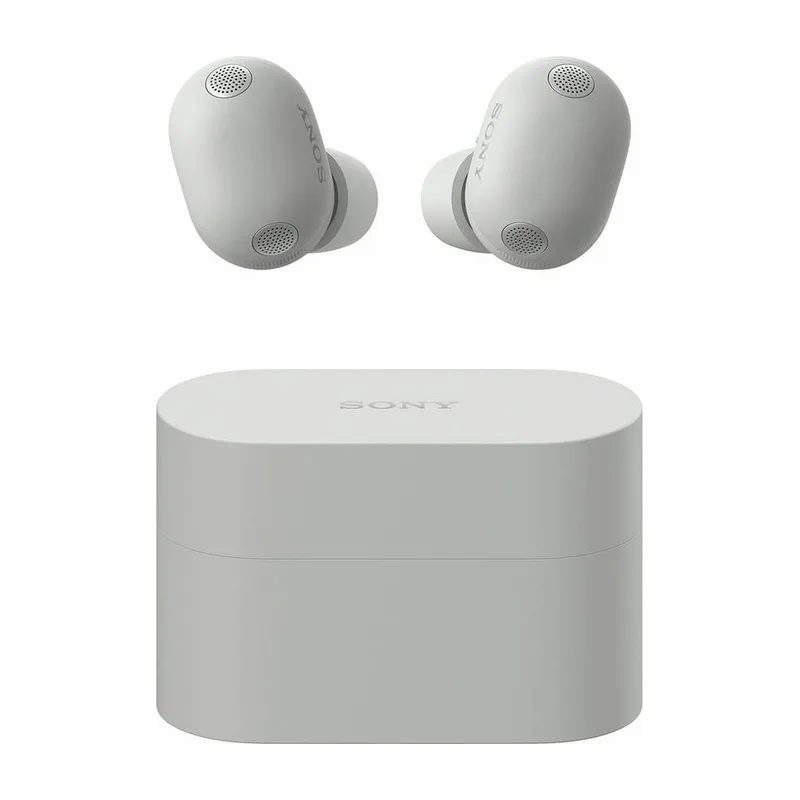
In depth: wireless earbuds explained
How we ranked the five pairs
We do not test earbuds ourselves. Each pair gets a score from 0 to 100 on seven criteria: sound, noise cancelling, calls, battery life, comfort, owner reviews and price. The overall rating is a weighted average calculated automatically, and the ranking follows that rating.
Sound counts for 25 per cent and noise cancelling for 20, since those are the main reasons to buy premium earbuds. Battery life counts for 15 per cent, and calls, comfort, owner reviews and price for 10 per cent each.
Battery scores are based on the figure with noise cancelling on, since that reflects normal use of premium earbuds. Pairs with longer stated battery life and larger case capacity score higher, and pairs whose battery life is not stated in our sources get a cautious score rather than a guess.
The Sony comes out on top because it scores highly on both sound and noise cancelling without a weak spot. The Technics is close behind thanks to its calls, multipoint and owner reviews, but loses points because its battery life is not stated in our sources.
The scores between the top three are close. The Sony leads the Technics by a small margin, and the Bose is a little further behind. A change in price after a sale or new information on the Technics' battery life could change the order, and we will update the ranking when that happens.
The Bose would win if noise cancelling were all that mattered, and the Sennheiser if sound were. The Soundcore is the best value. Commission from retailers never affects scores or ranking.
We also considered how complete the evidence is for each pair. Where Expert Reviews does not cover a criterion and owners give little information, we score cautiously rather than guess, which affects the calls scores for the Sony, Bose and Sennheiser.
What Expert Reviews' verdicts are based on
Expert Reviews has tested more than 300 pairs of earbuds over five years, using each pair for at least two weeks as a daily driver. It listens with Spotify, Tidal and local files, checks isolation in offices and on the London Underground, and records hours of use.
It publishes verdicts rather than measurements. That means our scores for sound, noise cancelling, calls and comfort rest on written judgements, which we translate into scores as consistently as we can. Where Expert Reviews does not cover a criterion, we give a neutral or cautious score.
Verdicts also reflect expectations at each price. Expert Reviews compares earbuds against rivals at similar prices, so a Recommended label on a budget pair and a Best Buy on a premium pair are not directly comparable. We score every pair on the same scale regardless of price, and let price count separately.
All five pairs here carry either a Best Buy or Recommended label from Expert Reviews. The Sony, Bose, Sennheiser and Technics are Best Buys, and the Soundcore is Recommended.
Laboratory measurements of noise cancelling and frequency response exist from other testers, but we have not combined them with Expert Reviews' verdicts here. We will consider adding a second independent source when updating this page.
Owner reviews at Argos complement the verdicts. They show how the earbuds hold up over months in many different ears, and they highlight issues such as fit and faults that a two-week review can miss.
Because Expert Reviews' verdicts are written rather than measured, two pairs with similar wording can differ in practice. We read the full roundup entry for each pair and score the strength of its language consistently, for example treating unmatched and superb as stronger than effective.
iPhone or Android?
All five pairs work with both iPhones and Android phones over Bluetooth. Some features, though, depend on your phone.
High resolution codecs such as LDAC and aptX Lossless work only with compatible Android phones. iPhones use AAC, so the Sony's LDAC or the Sennheiser's aptX Lossless brings no benefit there.
Android users have the most to gain from the Sony and Technics, which support LDAC. Expert Reviews specifically recommends the Sony for Android users who can use LDAC.
Apple's own AirPods integrate more closely with iPhones, with automatic switching between Apple devices. We have not included them because they are not in Expert Reviews' current roundup, and we want the same independent source for every model.
Spatial audio also varies by phone. Some spatial features work with any phone, while others need specific apps or devices. Check the manufacturer's details if spatial audio matters to you.
If you use an iPhone, focus on sound, noise cancelling, fit and battery rather than codec support. All five pairs here are good choices on those grounds.
Whichever phone you use, keep the earbuds' firmware updated through the app. Updates can improve connection stability, battery management and noise cancelling, and manufacturers sometimes add features after launch.
Which models we left out
Expert Reviews' roundup also includes the EarFun Air Pro 4+, CMF Buds 2, Bowers & Wilkins Pi8, Shokz OpenDots 2 and Beats Powerbeats Pro 2. We focused on five noise cancelling in-ear pairs with full availability at UK retailers.
We also limited the comparison to in-ear noise cancelling designs, since open-ear and sport earbuds with hooks are bought for different reasons and would be hard to score on the same criteria.
The EarFun and CMF are strong budget picks but were not in stock at a UK high street retailer we could verify on the assessment date; the CMF Buds 2 was listed as pre-order. The Shokz are open-ear earbuds without noise cancelling, which is a different category.
The Bowers & Wilkins Pi8 is listed at £299 in Expert Reviews' roundup and lacks spatial audio. The Beats Powerbeats Pro 2 is designed for sport with ear hooks.
We also left out older models that are still on sale, such as previous generations of the Sony and Bose earbuds, because Expert Reviews' current roundup focuses on the latest versions.
We also searched for earbuds from Addrevenue advertisers in the UK, but found none of the tested models. All buy links go to UK retailers or the manufacturer's own UK store.
If a budget model returns to stock at a major UK retailer, or Expert Reviews adds new picks, we will consider updating the comparison.
Our aim is a short list of strong, widely available pairs at different prices rather than every model on sale, so you can compare like with like. Each pair included was listed for sale at a UK retailer on the assessment date.
Buying guide: choosing the right wireless earbuds
Start with what you will use them for
Wireless earbuds have become very good across the board, and all five pairs here are recommended by Expert Reviews. The best choice depends on where and how you use them, so start there rather than with a brand.
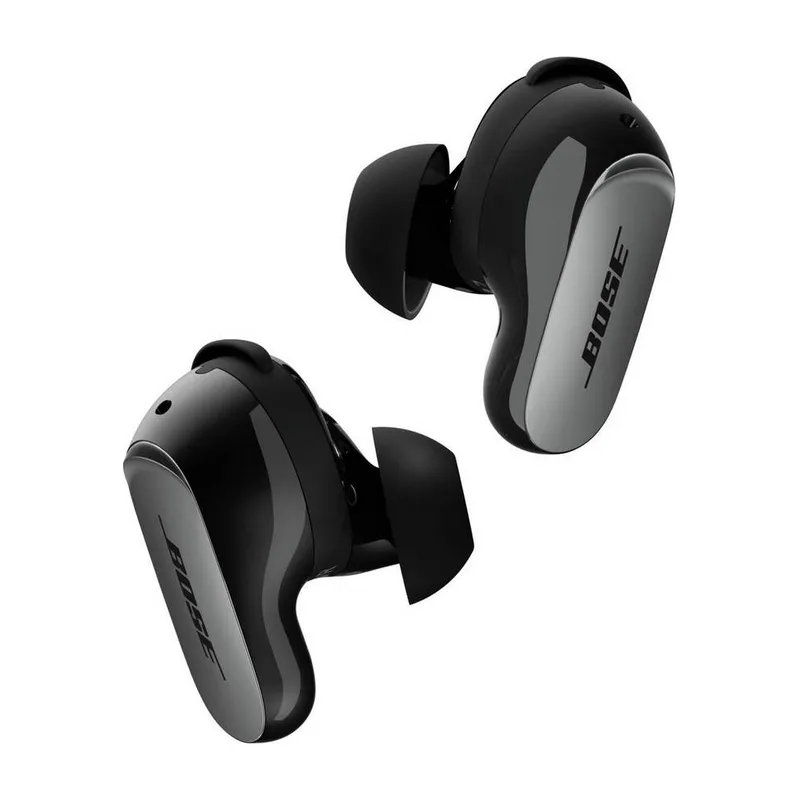
For commuting by train, bus or Underground, noise cancelling is the most important feature. The Bose QuietComfort Ultra Earbuds and Sony WF-1000XM6 block the most noise, according to Expert Reviews, and make low-volume listening possible in loud places.
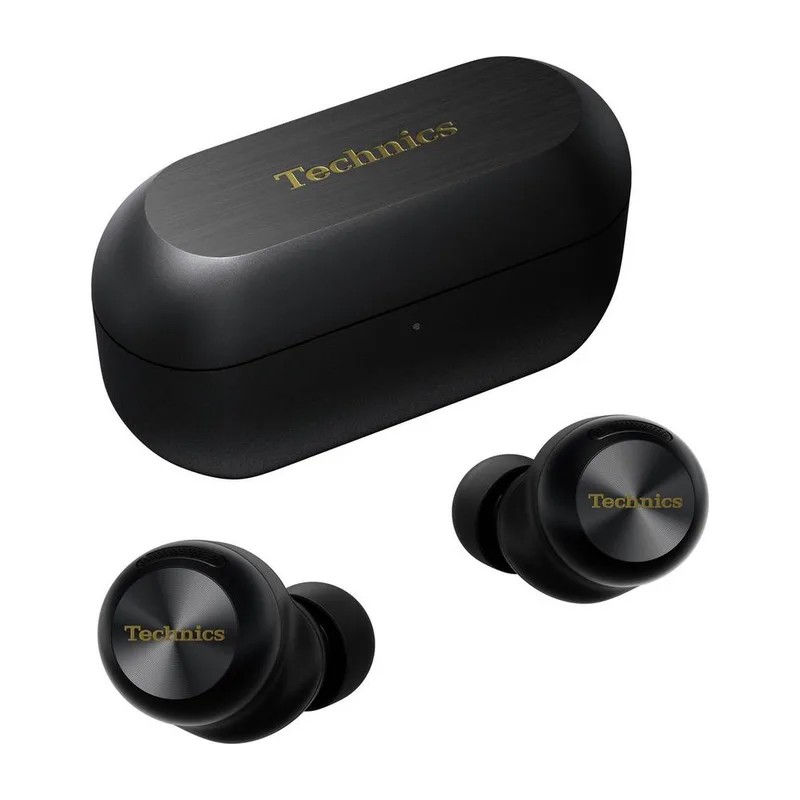
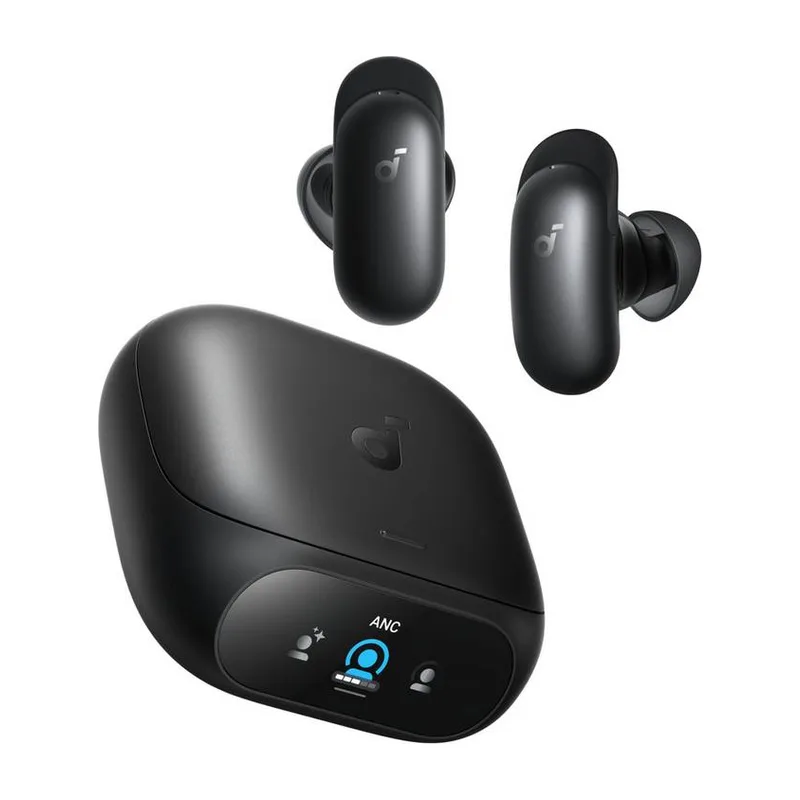
For working from home or the office, call quality and multipoint matter more. The Technics EAH-AZ100 connects to three devices at once and has top-notch calls according to Expert Reviews, and the Soundcore Liberty 5 Pro is class-leading for calls at a much lower price.
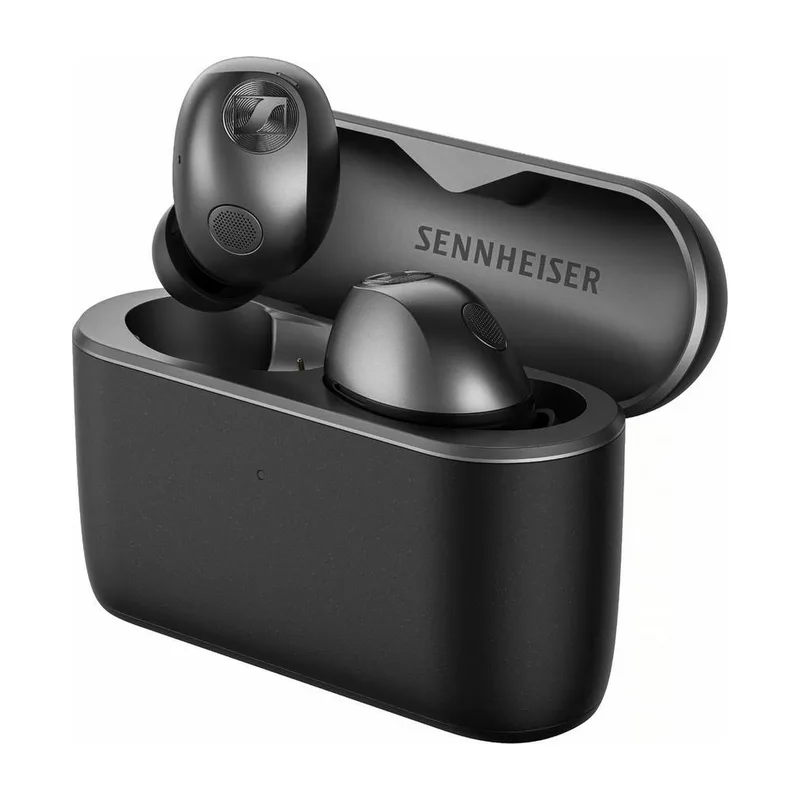
For listening at home or on quiet walks, sound quality takes priority. The Sennheiser Momentum True Wireless 5 has the best sound verdict here, with the Technics and Sony close behind.
For long journeys and days away from a charger, battery life is the deciding factor. The Soundcore lists the longest battery life here, and the Bose the shortest.
Many buyers use earbuds for all of these, so a pair that is good at everything, like the Sony, is often the best choice. If one use clearly dominates, pick the specialist.
Also think about where you will charge and store them. A slim case that fits a pocket suits daily commuting, while a bulkier case with more battery suits travel. An Argos owner of the Soundcore found its case bulky for a pocket.
Finally, consider how long you plan to keep them. Earbuds are usually replaced when the battery fades after a few years, so the Sennheiser's replaceable batteries are worth weighing if you want a pair to last.
Noise cancelling: what it does and does not do
Active noise cancelling uses microphones to pick up outside sound and plays an inverted signal to cancel it. It works best on steady, low sounds such as engine hum, air conditioning and train rumble, and less well on voices and sudden noises.
Fit matters as much as the electronics. An ear tip that seals well blocks high-pitched sounds passively, which the noise cancelling cannot do alone. Expert Reviews tests isolation with the supplied tips, so trying other sizes can improve results.
Expert Reviews rates the Bose and Sony as the best here, and the Technics as effective. The Sennheiser and Soundcore are a step behind, though both still reduce background noise noticeably according to owners.
Noise cancelling also helps at home. On a noisy street or with a busy household, it lets you listen at a comfortable volume without the background creeping in, and some people use it simply for quiet while reading or working.
Most earbuds also have a transparency or aware mode that lets outside sound in, so you can hear announcements or talk without removing them. The Bose calls this Aware mode, and the Sony adjusts automatically to your surroundings.
Noise cancelling uses battery. Every pair here lasts longer with it switched off, so turn it off when you do not need it.
Some people feel a slight pressure in the ears with strong noise cancelling. If that bothers you, most apps let you reduce the level or switch to an adaptive mode that adjusts to your surroundings.
Wind is a particular challenge. Microphones that pick up wind can make noise cancelling less effective outdoors, and some Argos owners of the Bose mention wind noise. Some apps offer a wind reduction setting for this reason.
Sound quality and codecs
How earbuds sound depends mostly on the drivers and tuning, not on the Bluetooth codec. Expert Reviews listens across genres with several sources and codecs, and its sound verdicts are the basis of our scores.
Expert Reviews' verdicts separate the pairs mainly on detail and balance. The Sennheiser is praised for detailed, nuanced sound, the Technics for first-rate sound, the Sony for excellent sound and the Bose for controlled, impactful bass.
Codecs decide how much audio data the phone sends to the earbuds. All earbuds support the basic SBC and usually AAC, which iPhones use. LDAC, supported by the Sony and Technics, and aptX Lossless, supported by the Sennheiser according to Argos, can carry more detail, but only with compatible Android phones.
In practice, the difference is small. Expert Reviews' reviewer of the EarFun Air Pro 4+ heard only a slight improvement from LDAC over AAC at normal volume. If you use an iPhone, codec support should not decide your choice.
Tuning can often be adjusted in the manufacturer's app. That is useful for the Soundcore, whose default tuning Expert Reviews finds overly bassy, and whose app it describes as feature-rich.
Spatial audio is a further option. The Bose has Immersive Audio and the Technics Dolby Atmos with head tracking, according to Expert Reviews, while the Sennheiser and Bowers & Wilkins Pi8 lack it.
Volume matters for judging sound too. Most earbuds sound fuller as volume rises, so compare pairs at the same level if you try them in a shop. Good noise cancelling helps here, because it lets you hear detail without turning the volume up.
If you stream from Spotify or similar services at standard quality, the source limits what any codec can deliver. High resolution codecs matter most with lossless streaming services or your own high quality files.
Battery life claims
Battery figures are manufacturers' claims, usually measured at moderate volume. Real battery life is often shorter, especially at high volume, with noise cancelling on or in the cold.
Look at the figure with noise cancelling on, since that is how most people use premium earbuds. Argos lists eight hours for the Sony, six for the Sennheiser and Soundcore, and Bose states up to six hours for its earbuds, or four with Immersive Audio.
The case extends the total. Argos lists 20 hours with the case and noise cancelling on for the Sony and Sennheiser, and 28 for the Soundcore. Bose says its case holds three full charges.
Quick charging helps on busy days. Bose says 20 minutes in the case gives up to two hours of playback.
Batteries wear out over time, and on most earbuds they cannot be replaced, which limits their life. The Sennheiser is the exception here: Expert Reviews notes that both the buds' and the case's batteries can be replaced.
Charging the case is the other half of battery life. Check whether the case supports wireless charging if you already have a charging pad, and whether it uses USB-C, which is now standard on new earbuds.
Earbuds left unused for weeks lose charge in the case too. If you only use them occasionally, top them up before a trip rather than assuming they are full.
For a typical commute of an hour each way, every pair here lasts a full working day of listening with a mid-day top-up in the case, so battery life mainly matters for long journeys.
Fit and comfort
Fit is personal, and it affects comfort, sound and noise cancelling at the same time. Earbuds that do not seal properly lose bass and let in noise, so trying different tip sizes is worth the effort.
Expert Reviews wears each pair for long sessions, often three hours or more. It praises the Bose's fit and finds the Sennheiser very comfortable, while noting the Sony is a little bulbous and the Technics comes with a limited choice of tips.
Owner reviews show how varied ears are. Some Argos owners find the Sennheiser too big, one says the Bose tips will not stay in, and an owner with small ears found the Soundcore aching after a while.
Weight and shape matter for long sessions. Larger buds that sit further out of the ear, as some owners describe the Sennheiser, can feel tiring after a few hours, while smaller buds may fall out during exercise.
For sport, look at water resistance and a secure fit. IPX4 means splash resistance, as on the Sony, Bose and Technics. IP54 and IP55, as on the Sennheiser and Soundcore, add dust protection and, for IP55, resistance to water jets.
Buy from a retailer with easy returns, and check the hygiene rules for returning earbuds that have been worn.
Clean the tips and the speaker grilles regularly. Earwax build-up muffles sound and can affect noise cancelling, and most manufacturers recommend a dry cloth or soft brush.
If you wear glasses or a hat, in-ear earbuds avoid the pressure that over-ear headphones can cause, which is one reason many people prefer them for long days.
Some earbuds detect when you take them out and pause the music automatically. It is a small convenience, but one that many owners come to rely on, so check that the pair you choose supports it if it matters to you.
Calls and microphones
All earbuds can be used for calls, but microphone quality varies widely. Small microphones far from the mouth struggle with wind and background noise.
Expert Reviews tests calls on Google Meet, Teams and Zoom and compares recorded voice clips. It rates the Technics top-notch and the Soundcore class-leading, with staggering clarity in loud places.
Expert Reviews does not cover calls for the Sony, Bose and Sennheiser in its roundup. Argos owners mention wind noise for the Bose and weak calls for the Sennheiser, so if you take many calls outdoors, the Technics or Soundcore are safer choices.
For video meetings at a desk, multipoint saves time, since the earbuds stay connected to both laptop and phone and switch automatically when a call comes in.
If calls are your main use, think about where you take them. Indoors, most premium earbuds sound clear. Outdoors, in wind or on busy streets, the differences grow, and that is where Expert Reviews' verdicts on the Technics and Soundcore matter most.
For important calls in quiet rooms, a wired headset or laptop microphone can still beat earbuds. Earbuds are at their best for convenience and calls on the move.
Check the microphone mute and call controls too. Touch controls vary between pairs, and some apps let you reassign gestures so you can answer and end calls easily.
Multipoint and switching devices
Multipoint lets earbuds stay connected to two or more devices at once. Without it, you need to disconnect from one device before connecting to another, which is tedious if you move between a laptop and phone during the day.
The Technics is the standout here, connecting to up to three devices according to Panasonic, which Expert Reviews calls class-leading. Bose says its earbuds support multipoint too.
Our sources do not confirm multipoint for the Sony, Sennheiser and Soundcore, so we list it as not stated. Check the manufacturer's details before buying if you need it.
Note that some features can be limited when multipoint is on. Panasonic says LDAC on the Technics is available only with two connected devices, not three.
Switching between devices is not always seamless even with multipoint. Some combinations of phones and laptops behave better than others, so check owner reviews that mention your devices.
If you only ever use earbuds with one phone, multipoint is a minor feature, and you can focus on sound and noise cancelling instead.
Bluetooth version matters less than it used to. Argos lists Bluetooth 5.3 for the Sony and 6.0 for the Sennheiser, but both work with older phones, just without the newest features.
Price and when to buy
Premium earbuds are often discounted. On the assessment date the Sony was £199.99, down from £249.99, and the Soundcore £109.99, down from £149.99. The Technics was £229.99 at Panasonic's own store, below the Argos price.
Launch prices tend to fall within months. Expert Reviews lists the Sony at £249 and the Bose at £239 at the time of its reviews, while Argos and Bose charged £199.99 and £299.95 on the assessment date. Prices can move in both directions.
Our price score uses the lowest price we found at a UK retailer on the assessment date. Since prices change often, the ranking could shift slightly after big sales, but price counts for only 10 per cent of the rating.
Guarantees differ. Argos lists one year for the Sony, Sennheiser and Technics, and two years for the Bose and Soundcore. UK consumer law gives further rights if a product fails early, whatever the guarantee says.
Cheaper options exist below £100. Expert Reviews recommends the EarFun Air Pro 4+ and CMF Buds 2 as budget picks, but we could not find them in stock at a UK high street retailer on the assessment date, so they are not included here.
If you are choosing between two pairs at similar prices, the guarantee length and the retailer's returns policy for worn earbuds can be good tie-breakers.
Remember that our price score uses the price on the assessment date. A sale on the Bose or Sennheiser could make either a better buy than its rank suggests, so compare current prices before you decide.