In depth: kettles explained
What Expert Reviews and Mumsnet measured, and what they could not
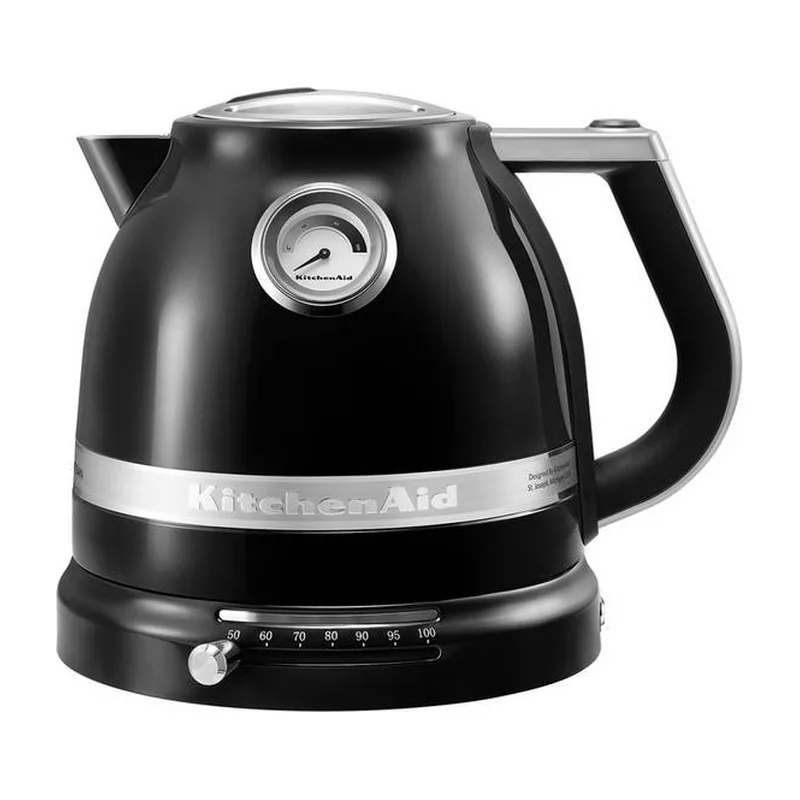
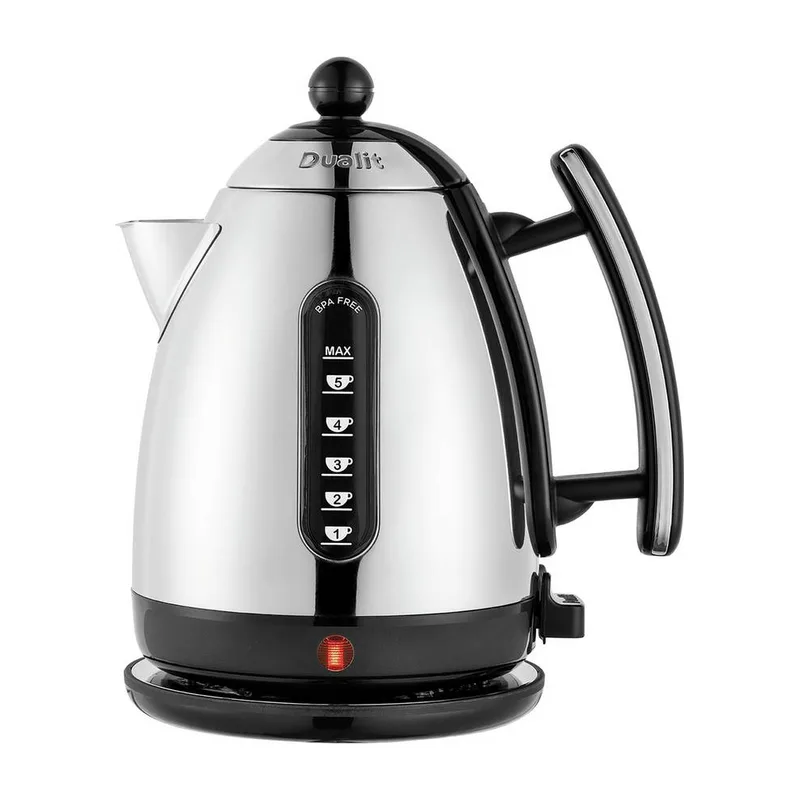
Expert Reviews timed a full litre and measured noise in decibels for several kettles, which gives the only like-for-like figures here. Its roundup, last updated in December 2025, includes the KitchenAid Artisan, the Russell Hobbs Attentiv and the Dualit Lite from our list. It also recorded heat retention and exterior temperature for some models, such as 33°C on the outside of the KitchenAid.
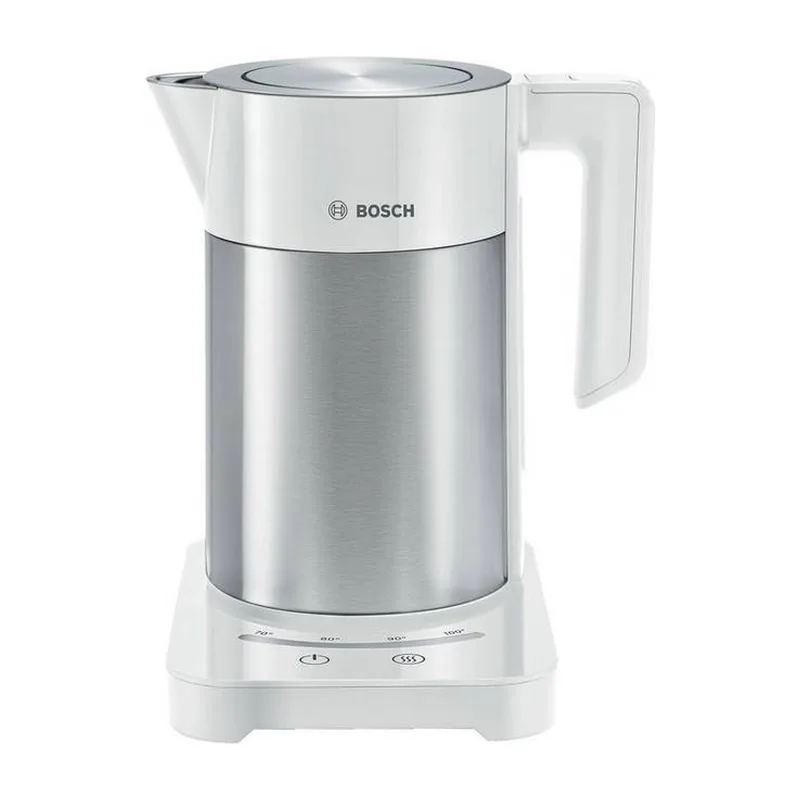
Mumsnet's testers took a different approach: they used kettles at home for weeks, timed single cups and described noise in words. Its October 2026 roundup covers the Bosch Sky, the Russell Hobbs Inspire, the Quiet Boil and the Dualit Lite. Mumsnet scored the Bosch 93 out of 100 after two months as a family's main kettle.
Neither Expert Reviews nor Mumsnet covered every kettle on our list, and their methods are not interchangeable. A cup boiled in 45 seconds at home cannot be compared directly with a litre timed in a test kitchen. We therefore score speed and noise only where there is evidence for the exact model, and leave gaps neutral.
Heat retention figures from Expert Reviews add one more angle: the Dualit Lite still held 93°C after five minutes. That matters if you boil, get distracted and come back for the water a few minutes later.
Where the two sources overlap, on the Dualit Lite, they broadly agree: Mumsnet liked its compact size and Expert Reviews measured a quick boil but a loud one.
Quiet Boil against Inspire: two cheap Russell Hobbs kettles with different strengths
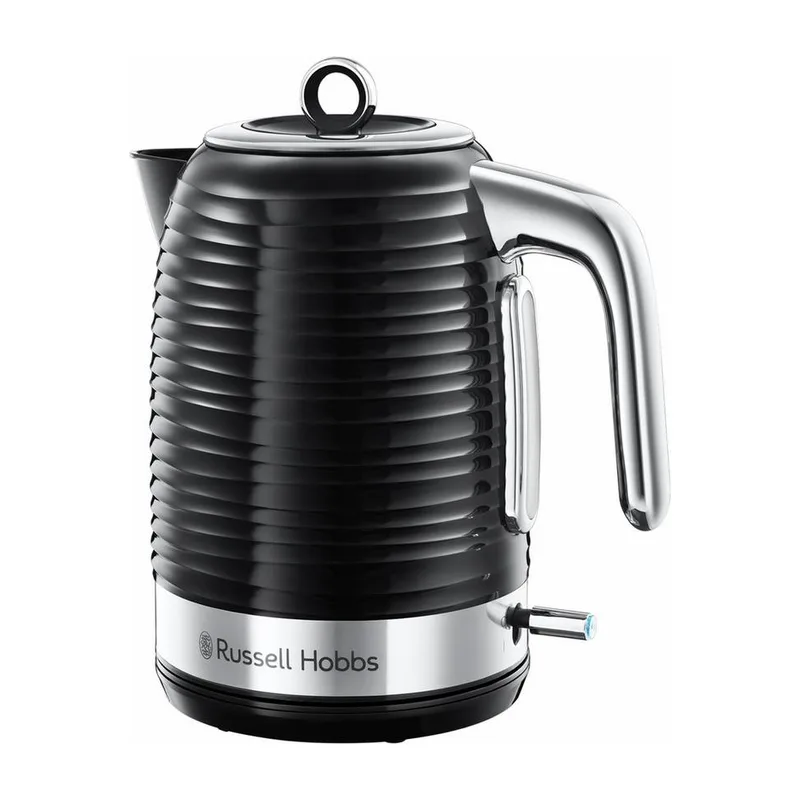
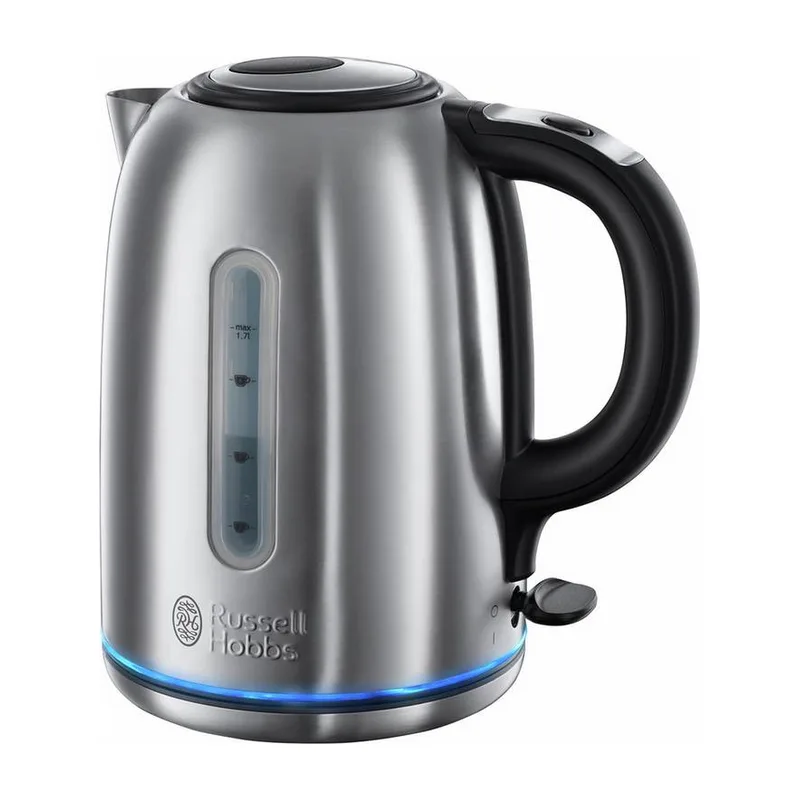
Both cost under £35, both boil a cup in about 45 seconds according to Mumsnet, and both hold 1.7 litres. The Quiet Boil was the quieter of the two in Mumsnet's testing, and its Argos review base is 26 times larger. The Inspire is lighter by about 0.12 kg and carries a longer guarantee if registered.
For most buyers the quieter operation and the much larger review base make the Quiet Boil the safer choice, which is why it tops our comparison. The Inspire suits buyers who prioritise weight or who want the longer guarantee.
Neither offers temperature control, so if you might want it later, spending £32 more on the Attentiv now is cheaper than buying a second kettle.
A third cheap option, the John Lewis Anyday, measured well in Expert Reviews' timing but was out of stock online when we checked, so it is not in our ranking.
Both kettles are widely stocked, so if one is out of stock at a particular retailer, the other is easy to find at a similar price on the same day.
Looking after a kettle so it stays quick and quiet
Limescale is the main reason a kettle slows down and gets louder over time. Scale on the element insulates it from the water, so it takes longer to heat and the bubbles that make the noise become more pronounced. Regular descaling keeps both in check.
Empty the kettle after use rather than leaving water standing, and avoid filling above the maximum mark, which can cause spitting from the spout. Mumsnet's note that the Quiet Boil may get louder with age is consistent with this: scale and wear change the boil.
For descaling, half fill the kettle with a mix of water and citric acid or a descaler made for kettles, boil it, leave it to stand and then rinse several times. Vinegar works too but can leave a smell. Always follow the manufacturer's instructions, because some warn against particular products.
Wipe the base connector dry if water spills on it, and check the cable for kinks. These are the parts that wear on a kettle used several times a day.
If a kettle starts to switch off before boiling, or keeps boiling after it should have stopped, the thermostat may be at fault. Stop using it and contact the retailer or manufacturer under the guarantee.
KitchenAid against Bosch Sky: two ways to get temperature control
Both kettles let you choose a temperature, both have hundreds of Argos reviews averaging 4.7 or 4.8, and both cost £100 or more. The KitchenAid has the measured quiet boil and a three-year guarantee. The Bosch has the 30-minute keep warm, a larger 1.7-litre capacity, a 300 ml minimum fill and a lower price.
For tea drinkers who brew a pot and then a second cup later, the Bosch's keep warm is the more useful feature. For anyone in an open-plan home who boils early in the morning, the KitchenAid's quieter operation is worth the extra £49.
Weight also differs. The Bosch weighs 1.8 kg empty and the KitchenAid 2.15 kg, so the Bosch is easier to lift despite holding more water.
If neither feature matters, both are more kettle than you need, and the Quiet Boil or the Inspire will serve just as well for black tea and instant coffee.
Both are also good choices for anyone who brews coffee by hand. Pour-over and cafetière coffee are often made just below boiling, and a kettle that stops at the right point removes one variable from the routine. For instant coffee, though, boiling water is fine and neither feature adds anything.
Buying guide: choosing the right kettle
At 3,000 W, boil speed barely separates one kettle from another
Five of the six kettles here are rated at 3,000 W, the most a UK kettle can practically draw from a standard 13 amp socket. Expert Reviews' measured times for a litre ranged only from 2 minutes 20 seconds for the Russell Hobbs Attentiv to 2 minutes 26 seconds for the Dualit Lite. Six seconds is not a reason to choose one over another.
Where speed does vary is with lower-powered kettles, which we left out of this comparison. Expert Reviews timed a 1,800 W smart kettle at over four minutes for a litre. If you see a kettle under 2,500 W, expect a noticeably slower boil.
The 13 amp limit is also why UK kettles boil faster than those in countries with lower mains voltage. A 3,000 W kettle on a UK socket is close to the practical maximum, so manufacturers compete on noise, features and design rather than power. If you see a kettle advertised as rapid boil, check the wattage: at 3,000 W it is no faster than any other kettle here.
The fastest way to a quicker cup is to boil only what you need. A kettle with a low minimum fill, such as the Bosch Sky at 300 ml, saves more time and energy than any difference in power between these models. Mumsnet's testers boiled a single cup in under a minute in the Bosch, the Inspire and the Quiet Boil.
The practical advice is the same for every kettle here: fill only what you need, and the boil will be quicker than any power difference could make it.
Expert Reviews' measurements were taken under the same conditions for each kettle in its roundup, which is why we treat its times as comparable with each other but not with Mumsnet's cup times.
Noise is the difference you will notice every morning
Kettles are loud because water near the element forms small bubbles that collapse as they rise. Designs that reduce this, such as the Quiet Boil, aim to spread the heat more evenly. The gap is real: Expert Reviews measured 52.2 dB for the KitchenAid and 58.3 dB for the Dualit Lite, and because decibels are logarithmic, six points is a clearly audible difference.
Few sources measure noise, so most kettles here have no figure. Mumsnet's testers singled out the Russell Hobbs Quiet Boil as the quietest they tried, without a decibel reading. We give kettles with no noise evidence a middle score rather than assume they are loud or quiet.
If you live in a flat, share a kitchen with a sleeping baby nearby or boil the kettle before anyone else is up, noise is worth more weight than we give it. In that case the Quiet Boil and the KitchenAid are the two to look at.
Noise also depends on how full the kettle is and how much limescale has built up, so a quiet kettle can become louder if it is not descaled.
Kettles with a measured noise level are rare, so for many models owner reviews are the only guide. Comments about a loud boil repeated across many reviews are a useful warning sign.
Variable temperature is worth paying for only if you brew below boiling
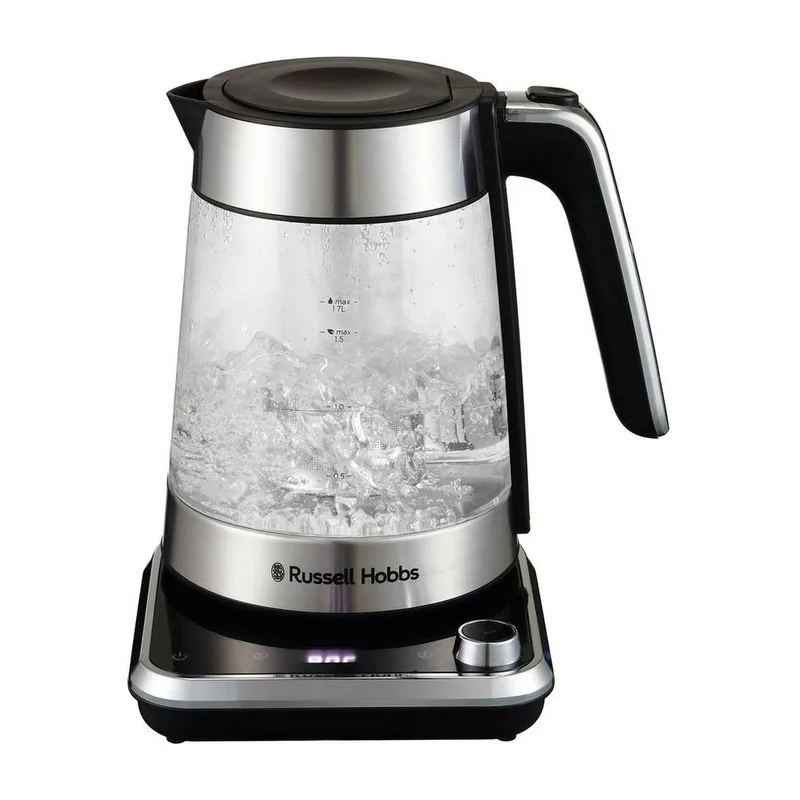
Green, white and oolong teas and pour-over coffee are usually brewed below 100°C, and a kettle with temperature settings saves waiting for boiled water to cool. The Bosch Sky, KitchenAid Artisan and Russell Hobbs Attentiv all offer it. The Attentiv covers 40 to 100°C and adds a tea infuser.
For black tea, instant coffee and cooking, you need boiling water, and temperature control adds cost without benefit. The Quiet Boil at £28 does that job as well as the Bosch at £100.
Temperature control also matters for flavour, not just convenience. Water poured at a full boil onto delicate green tea tends to draw out bitterness, which is why tea brands often recommend 70 to 80°C. A kettle that stops at the right temperature avoids guesswork, while a standard kettle needs you to wait a few minutes after boiling.
Keep warm is the feature that separates the Bosch. It holds the set temperature for 30 minutes according to Argos, which suits anyone who makes several cups over a morning. None of the other kettles here lists a keep warm function.
If you are unsure whether you will use temperature control, the Attentiv is the cheapest way to find out.
Temperature control also suits baby formula preparation for some parents, but follow the guidance on the formula packaging and from health services rather than relying on a kettle's settings.
A light kettle is easier to pour than a large one is useful
A full 1.7-litre kettle weighs nearly two kilos more than an empty one. The Inspire weighs 1.18 kg empty, the Quiet Boil 1.3 kg and the KitchenAid 2.15 kg, so filled to the top the KitchenAid is close to 3.7 kg. For anyone with weak wrists or arthritis, that difference matters more than any feature.
Capacity is the trade. The KitchenAid and Dualit hold 1.5 litres, the others 1.7. For a household that makes four mugs at once, 1.5 litres is enough; for a family filling a teapot and a cafetière, the extra 0.2 litres is useful.
The handle matters as much as the weight. A full-length handle that runs down the side of the jug spreads the load better than a short loop at the top, and a lid that opens by a button rather than a pull saves effort for anyone with stiff fingers. Argos lists a push-button lid on the Attentiv; the other retailers we used do not describe lid mechanisms in detail.
If lifting is the main concern, a lighter 1.7-litre kettle filled only as far as you need is better than a heavy 1.5-litre one filled to the top.
Lever lids and push-button lids also differ in how much grip they need, which can matter as much as weight for some users.
Cable length is another practical detail. The Attentiv's cable is 0.91 m according to Argos, so check where your socket is before choosing a spot for the base.
Limescale decides how long a kettle looks good
Much of England has hard water, and limescale builds up on the element and inside the body. A removable, washable filter at the spout, like the one on the Russell Hobbs Attentiv, stops flakes reaching your cup but does not prevent buildup inside.
Glass kettles show scale clearly. Expert Reviews' main complaint about the Attentiv was that it is not easy to clean, and a glass body makes any residue visible. Stainless steel kettles such as the Quiet Boil hide it better, though they need descaling just as often.
Scale also changes how a kettle sounds. As it builds up, bubbles form less evenly on the element and the boil becomes louder and rougher. A kettle that seems noisier than it used to be is often simply due for descaling.
Descaling with citric acid or a branded descaler every few weeks in a hard water area keeps the boil time down, because scale on the element slows heating. No source available to us reports how each kettle performs after months of hard water use.
Filtered water reduces scale too, though a separate filter jug adds cost and another item to clean.
Some owners use filtered water in hard water areas to reduce scale. It is a matter of preference, and none of the kettles here requires it.
The guarantee varies more than the boil time
Guarantees here range from one year for the Dualit Lite to three years for the KitchenAid, and up to three years for the Russell Hobbs Inspire and Attentiv if registered online according to Argos. A kettle is used several times a day, so the switch and element do wear, and a longer guarantee is real value.
Russell Hobbs ties its longer cover to online registration, which is easy to forget. Register on the day of purchase and keep the email.
A long review history is a different kind of reassurance. The Quiet Boil's 6,678 Argos reviews cover years of use and would show a common failure if there were one. That is part of why it comes out on top despite a two-year guarantee.
Keep the box until the guarantee period is over if you can, as some retailers ask for it on returns.
For premium kettles, check whether the retailer or manufacturer offers repairs. A longer guarantee is only useful if making a claim is straightforward.
Smart and app-connected kettles solve a problem most people do not have
Smart kettles let you start the boil from a phone or voice assistant. Expert Reviews tested one such model, an 1,800 W smart kettle that took over four minutes to boil a litre, almost twice as long as the 3,000 W kettles here. Lower power is common on smart models because they are designed to be left on standby.
For most households the convenience does not outweigh the slower boil and higher price. You still have to fill the kettle by hand, so the time saved is small. We did not include a smart kettle in this comparison for that reason.
If remote start is important to you, look for a smart model with at least 2,500 W, and check whether the app needs a permanent internet connection to work.
Most people are better served by a dependable standard kettle than by extra features they rarely use.
Smart kettles also add another device that needs updates and a working app. If the manufacturer stops supporting the app, the remote features may stop working while the kettle itself carries on.
Cordless design and a 360-degree base are standard, so look at the spout and lid instead
Every kettle in this comparison sits on a 360-degree base and lifts off cordless, so those features do not separate them. The details that do are less obvious: how the lid opens, whether the spout drips and how easy the water window is to read.
Expert Reviews noted that one budget kettle rocked on its base and that another had a loose lid that dribbled. Neither is on our list, but both are examples of the small faults that only show up in use. Owner reviews are the best place to find them, which is another reason we weight review volume.
Water markings matter for anyone who boils only what they need. Mumsnet criticised kettles with small or cup-only markings in its roundup; Argos reviewers mention one, two and three cup markers on the Inspire, which makes measuring easy.
In short, the lid and spout often decide whether you enjoy using a kettle more than its specification sheet does.
When comparing kettles in a shop, try lifting each one with the lid open and closed, and pour an imaginary cup. Small differences in balance are easier to feel than to read about.