In depth: stand mixers explained
How we ranked the five mixers
We do not test stand mixers ourselves. Each model gets a score from 0 to 100 on six criteria: mixing and whipping, dough and heavy loads, bowl capacity, accessories and features, owner reviews and price. The overall rating is a weighted average calculated automatically, and the ranking follows that rating.
Mixing counts for 30 per cent and dough for 20 per cent, since those are the main jobs. Accessories and price count for 15 per cent each, and capacity and owner reviews for 10 per cent each.
Dough scores depend on how each mixer coped when Expert Reviews filled it to maximum dough capacity. A mixer that struggled or triggered overheating protection scores low, while one that stayed stable scores high. Where Expert Reviews says nothing about dough, we give a middling score.
Owner reviews tip the balance in several places. The Artisan and Classic benefit from very large, positive review bases at Argos, while the Kenwood's 3.5 average from 12 John Lewis reviews and the Bowl Lift's lack of reviews pull them down.
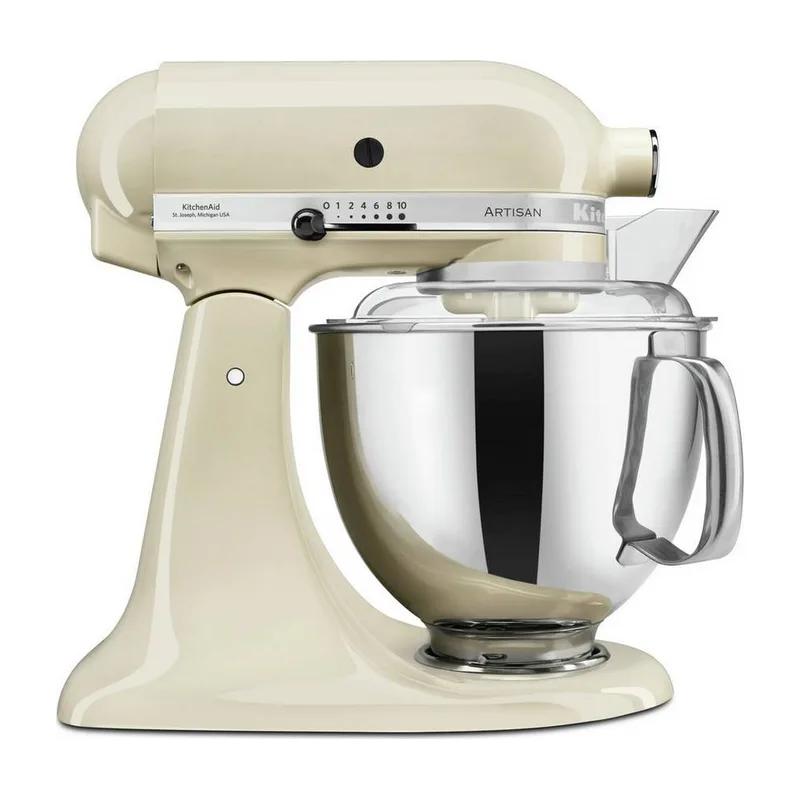
The Artisan wins because it is strong at everyday baking, comes with two bowls and four tools, and has a huge, positive owner base. The Kenwood is close behind on performance and features but is held back by its high price and few, mixed reviews.
The Smeg and Bowl Lift are close in third and fourth place, for opposite reasons: the Smeg is excellent at cakes but weak with dough, while the Bowl Lift is the best with dough but its Argos listing gives little information. Commission from retailers never affects scores or ranking.
If bread is your priority, re-read the dough scores: the Bowl Lift and Kenwood lead, and either may be a better choice for you than the overall winner.
What Expert Reviews' tests show, and where they stop
Expert Reviews fills each mixer to its maximum dough capacity to see how it copes, measures noise with a meter, watches for vibration, and times everyday tasks such as whipping egg whites, mixing cake batter and frosting with consistent quantities.
Its roundup publishes the verdicts but not the figures. We therefore score mixing and dough on its written results, such as the Smeg whipping sponge batter in seconds but struggling with dough, and the Bowl Lift staying stable at maximum load.
Across the five, a clear pattern emerges. The Classic and Smeg struggled with dough in Expert Reviews' tests, while the Bowl Lift and Kenwood are aimed at heavier work and coped well.
The roundup was published in September 2024 and shows no later revision date. All five models are still sold, and stand mixers change slowly, but newer versions or price changes may not be reflected.
For the Kenwood Titanium Chef Patissier XL, the verdict focuses on features and versatility rather than measured performance, so its dough score relies partly on its specifications.
Owner reviews at Argos and John Lewis fill some of the gaps, especially on reliability. The Artisan's 1,531 and the Classic's 412 Argos reviews give a strong picture of long-term satisfaction, while the Kenwood and Bowl Lift have little or no owner evidence.
Which models we left out
Expert Reviews' roundup also includes the Kenwood KMix KMX754, its best value pick, and the Kenwood Titanium Chef Baker, its pick for integrated weighing.
Expert Reviews named the KMix its best value pick, praising strong performance for the price, though it found the mixer a little shaky with bread dough.
The KMix was out of stock at Kenwood's own UK site on the assessment date. Argos sells a Kenwood Chef Baker, but it is the KVC65 model with a 1,200 W motor rather than the Titanium Chef Baker Expert Reviews tested, so its results do not transfer.
We also searched for stand mixers from Addrevenue advertisers in the UK. Mustard.Shop sells the Wilfa ProBaker, but we found no independent test of it, so it is not included.
Cheaper stand mixers from supermarket and own brands are widely sold, but Expert Reviews' current roundup does not include them, and we want the same independent source for every model.
We will review the selection when Expert Reviews updates its roundup or when the excluded models return to stock.
Our goal is a short list covering everyday baking, heavy dough and different budgets, rather than every model on sale.
Getting the best results from a stand mixer
Start slowly. Begin on the lowest speed when adding flour or icing sugar, then increase it once the dry ingredients are incorporated. A pouring shield helps, and the Artisan and Smeg include one.
Do not overload the bowl with dough. Expert Reviews' stress test at maximum capacity shows the limits, and the Smeg's overheating protection switched on when kneading a full batch. Stay below the stated maximum for daily use, and let the motor rest between batches.
Whisk egg whites in a spotless bowl. Any trace of fat or yolk stops them reaching full volume, which is another reason a second bowl, like the Artisan's, is handy.
Use the right tool for the job. The flat beater is for cakes, biscuits and mashed potato; the whisk for cream, egg whites and light batters; the dough hook for bread and pizza. Using the whisk on heavy mixtures can bend it.
Room temperature ingredients mix better. Cold butter and eggs straight from the fridge take longer to cream and can make batter split, so take them out in advance when you can.
Scrape the bowl once or twice during mixing, unless you have a flex edge beater like the Artisan's. Ingredients stick to the sides and bottom, and a quick scrape gives a more even mix.
Clean the tools promptly. Dried dough and batter are harder to remove, and some coated tools are not dishwasher safe, so check the manual.
Finally, read the manual's guidance on maximum loads and mixing times for dough. Kneading for longer than recommended can overheat any motor, and following the guidance keeps the mixer working for longer.
With care, a good stand mixer should give years of service, which is why owner reviews and guarantees matter as much as the price.
Buying guide: choosing the right stand mixer
Decide what you will bake most
A stand mixer earns its place on the worktop by saving time on jobs that tire your arms: whisking egg whites, creaming butter and sugar, and kneading bread dough. Before choosing, think about which of these you do most.
It also helps to think about quantities. A mixer that copes with a single loaf may struggle with a double batch, and a large bowl is wasted on small cakes.
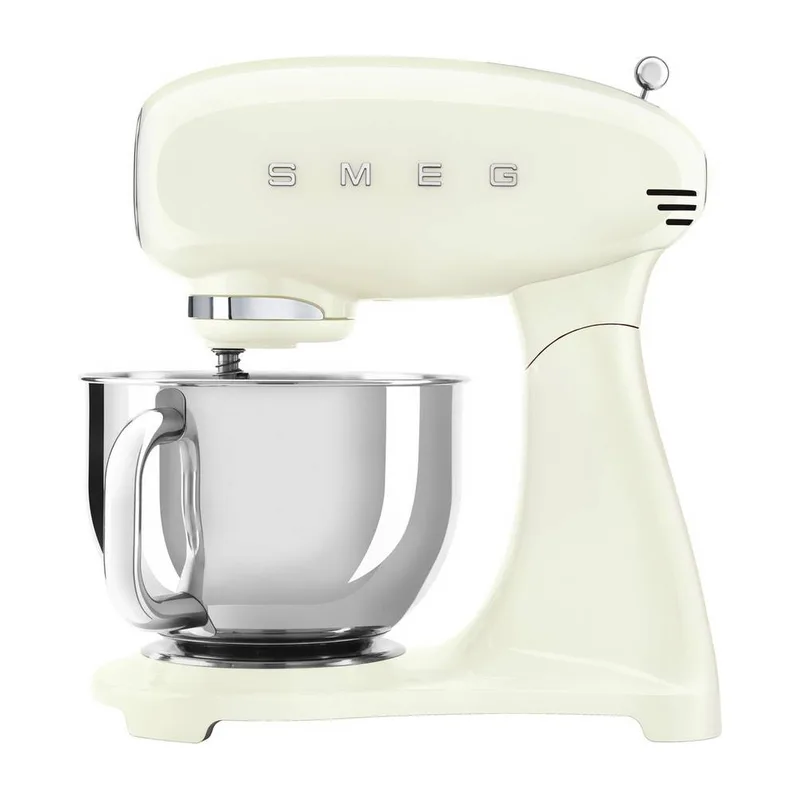
If you mainly bake cakes, cupcakes, meringues and biscuits, almost any good stand mixer will do. Expert Reviews found the Smeg whipped a double batch of sponge batter in seconds and the KitchenAid Artisan mixed speedily and thoroughly.
If you bake bread, pizza dough or enriched doughs such as brioche every week, the motor and stability matter much more. Expert Reviews found the Smeg and the KitchenAid Classic struggled when kneading a full load of dough, while the KitchenAid Bowl Lift handled stiff dough with little strain.
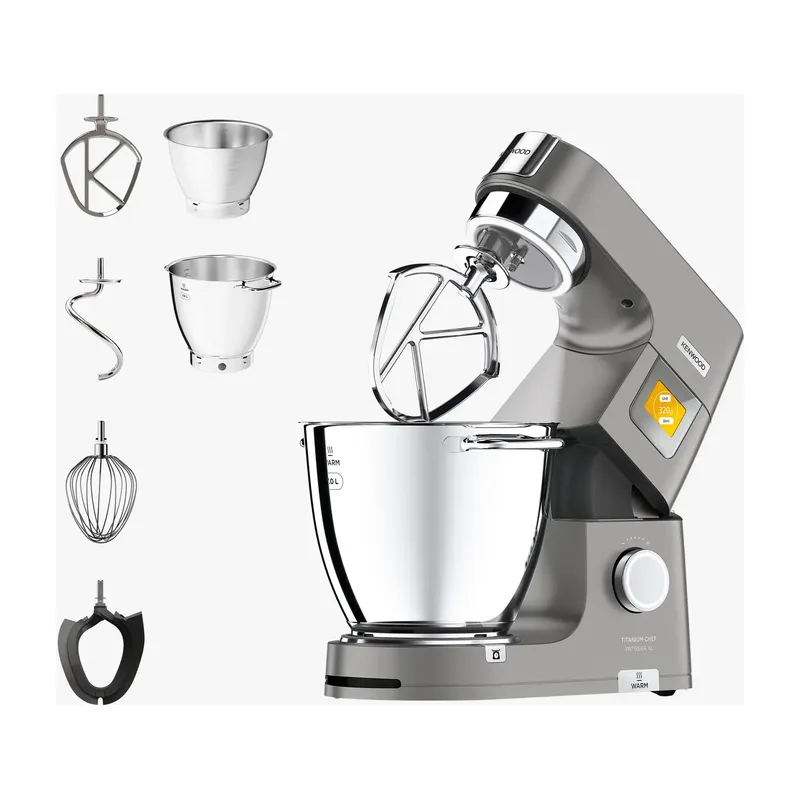
If you bake for a large family or events, capacity becomes the deciding factor. The Kenwood Titanium Chef Patissier XL has a 7-litre bowl and a 5-litre bowl, the largest here.
Think about how often you will use it as well. A stand mixer used twice a year is a costly gadget, while one used every weekend can replace a hand mixer, a set of scales and, with attachments, a pasta machine.
Many people buy a stand mixer for cakes and then start making bread. If you think that might be you, it is worth paying for a model that can cope with dough.
Finally, consider who else in the household will use it. A simple speed lever is easier for occasional users than a touchscreen with presets.
If you mostly make savoury food, a food processor may be more useful than a stand mixer. Stand mixers shine with baking; for chopping, slicing and grating, a processor does more.
Tilt-head or bowl lift?
Most home stand mixers are tilt-head designs, where the motor head hinges back so you can fit the bowl and tools. The KitchenAid Artisan, Classic and Smeg work this way.
In a bowl lift mixer, the head is fixed and a lever raises the bowl to the beater. The design is generally sturdier, which is why Expert Reviews found the KitchenAid Bowl Lift stayed stable with minimal shaking when filled to maximum with dough.
Tilt-head mixers are easier to use day to day, since you can lift the head to add ingredients or scrape the bowl. Bowl lift mixers are better for heavy, regular dough work.
Whichever design you choose, look at how close the tools come to the bottom of the bowl. A tool that leaves a gap misses small quantities, and some models let you adjust the height.
Check the height of your worktop cabinets. Tilt-head mixers need clearance above to lift the head, which can be a problem under low wall cupboards.
With a bowl lift, scraping down the bowl means lowering it first, which takes a moment longer. Most bakers get used to it quickly, and the extra stability is worth it for heavy dough.
Bowl lift mixers usually have larger bowls too. The KitchenAid Bowl Lift's 5.6-litre bowl is bigger than the 4.8-litre bowl on the Artisan tilt-head.
If you are unsure, a tilt-head mixer is the safer choice for most kitchens. It is easier to use, fits under more cupboards, and handles everyday baking well.
Motor power: why wattage misleads
Wattage figures vary widely, from 275 W for the KitchenAid Classic to 1,400 W for the Kenwood Titanium Chef Patissier XL. But wattage is a poor guide to how well a mixer works.
KitchenAid's 300 W Artisan mixes quickly and its 325 W Bowl Lift handles stiff dough well in Expert Reviews' testing. The Smeg, at 800 W, struggled at full dough capacity.
In other words, compare how mixers performed in Expert Reviews' tests rather than their wattage. A well designed low-wattage mixer can outperform a high-wattage one that shakes or overheats.
What matters more is how the motor copes under load: whether it slows, overheats or shakes. Expert Reviews' stress test of filling each mixer to maximum dough capacity is a better guide than the number on the box.
Overheating protection, as on the Smeg, stops the motor before it is damaged. It is a useful safety feature, but if it switches on often, the mixer is being asked to do more than it was designed for.
Speed settings matter alongside power. A very low speed, like the Bowl Lift's half speed, lets you fold in flour without it flying out of the bowl, while high speeds whip cream and egg whites quickly.
Longer guarantees can be a sign of confidence in the motor. Argos lists five years for the Artisan, and KitchenAid states five years for the Bowl Lift, while the Classic and Kenwood come with two years.
Bowl size and real capacity
Bowl size is given in litres, but the useful capacity is less than the full volume, especially for dough, which climbs the hook. Expert Reviews quotes the Bowl Lift's capacity as up to 3.7 kg of dough or 11 small pizzas, which is more useful than the 5.6-litre figure.
For most households, a bowl of 4.5 to 5 litres is enough for a large cake or a standard loaf. The Artisan and Smeg both have 4.8-litre bowls; the Classic's is smaller at 4.3 litres according to Argos.
Expert Reviews' figures for the KitchenAid Bowl Lift show how capacity is often expressed: up to 0.5 kg of dry flour, 3.7 kg of dough or 11 small pizzas. Compare those figures across models rather than the bowl volume alone.
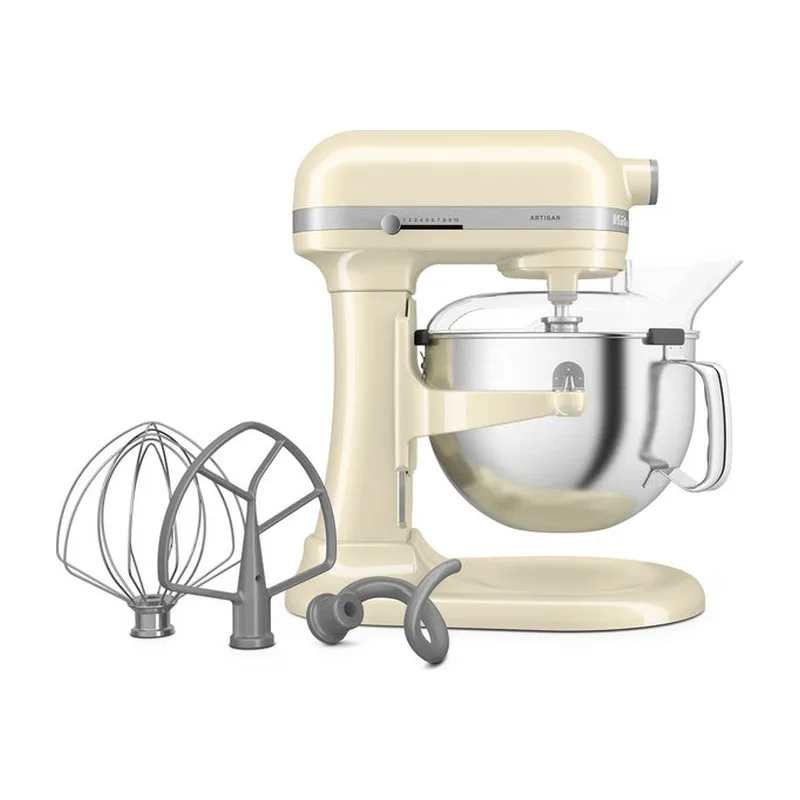
A second, smaller bowl is handy. The Artisan comes with a 3-litre bowl as well as the main one, so you can whisk egg whites while batter waits in the other bowl. The Kenwood includes a 5-litre bowl alongside its 7-litre bowl.
Very large bowls can be less effective with small quantities, since the tools may not reach a small amount of egg white at the bottom. If you often make small batches, a medium bowl or a second small bowl helps.
Glass and stainless steel bowls each have advantages. Stainless steel is lighter and harder to break; glass lets you see the mixture. The main bowls on the KitchenAid and Smeg models are stainless steel, according to the retailers.
Look at the stated maximums for dough and cake mixture rather than the bowl volume alone. Manufacturers often give these figures in kilograms, which is a more practical guide to what you can make in one go.
If you often halve recipes, check that the beater reaches the bottom of the bowl. Small quantities in a large bowl may need more scraping.
Accessories and attachments
Every mixer here comes with the three basic tools: a flat beater for cakes and biscuits, a whisk for cream and egg whites, and a dough hook. Beyond that, the extras vary a lot.
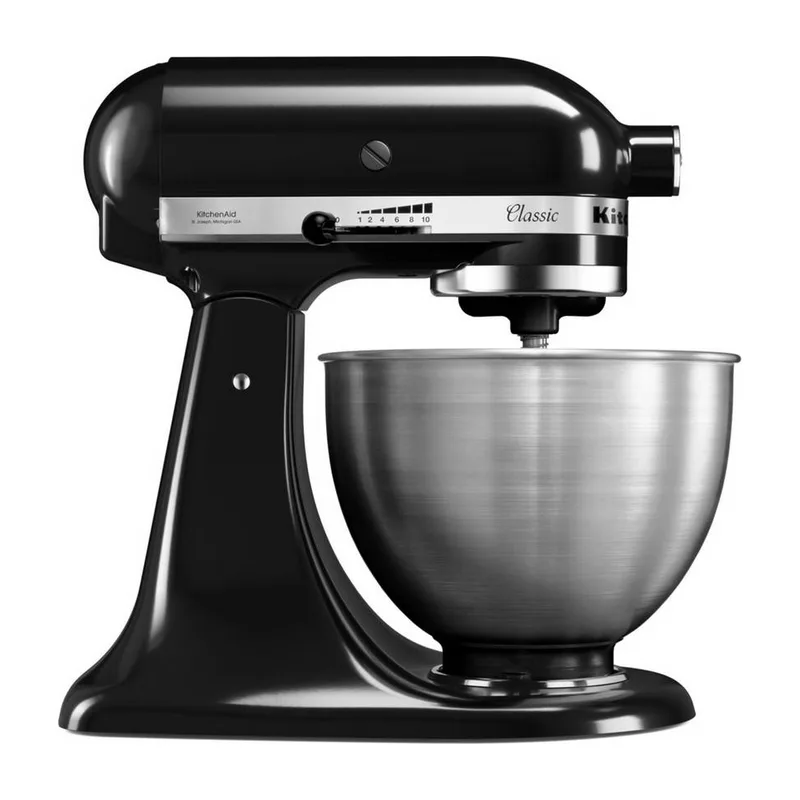
The Artisan includes a flex edge beater that scrapes the bowl as it turns, a pouring shield and a second bowl. The Smeg includes a flexible beater and pouring shield. The Classic has no splash guard, which Expert Reviews lists as a con.
Most mixers have a hub for optional attachments such as pasta rollers, mincers, spiralisers and ice cream makers. KitchenAid lists more than 15 optional attachments for its mixers, but attachments can be expensive, so budget for them if you plan to use them.
Before buying attachments, consider whether a separate appliance would do the job better. A dedicated food processor or pasta machine may be cheaper and more practical than a mixer attachment you use rarely.
Check what is actually in the box. The Argos listing for the KitchenAid Bowl Lift lists only optional accessories, so confirm which tools are included before buying.
A pouring shield, included with the Artisan and Smeg, stops flour puffing out when you start mixing and lets you add liquids without splashing. It is a small item that makes a big difference to mess.
Spare bowls are useful if you bake several things in one session. The Artisan includes a second bowl, and spare bowls are sold for most models.
Store attachments near the mixer. Tools that live in a drawer across the kitchen tend not to get used, and a small box or shelf beside the mixer keeps everything together.
Smart features: scales, warming and presets
The Kenwood Titanium Chef Patissier XL goes furthest with built-in features. It weighs ingredients in the bowl, warms the bowl for proving dough or melting chocolate, and has a touchscreen with six presets, according to John Lewis.
None of the KitchenAid or Smeg mixers here has built-in scales or warming, so the Kenwood stands alone in this comparison on features.
These features save time and washing up for keen bakers. Weighing in the bowl means one less set of scales and bowls to clean, and a warming bowl can prove dough without a warm airing cupboard.
Expert Reviews notes the screen can lag and says the Kenwood is not ideal for casual bakers, who may never use the extra features. If you bake once a month, a simpler mixer is better value.
The KitchenAid and Smeg mixers keep things simple with speed dials or levers. Fewer features mean less to go wrong and an easier learning curve.
Built-in scales have quirks. Built-in scales measure everything touching the machine, so keep your hands clear while weighing for an accurate reading.
Presets are most useful for repetitive jobs such as kneading bread or whipping cream, where the mixer runs for a set time at the right speed while you prepare other ingredients.
If you like the idea of weighing in the bowl but prefer a simpler mixer, a set of digital kitchen scales with a tare function does the same job for a fraction of the cost, at the price of one more thing to wash.
Noise, weight and space
Stand mixers are heavy, and most will live on the worktop. Owners at Argos describe both the Artisan and the Classic as heavy to move, and one says the Classic is best kept on the worktop.
Measure the space you have, including the height under wall cupboards. Tilt-head mixers need room above to lift the head, and bowl lift mixers are tall.
A cover keeps dust off a mixer stored on the worktop, and is worth buying if the mixer is used less than weekly.
Noise varies between models. Expert Reviews measures it with a noise meter but does not publish the figures in its roundup. The Kenwood carries Quiet Mark certification according to John Lewis.
Vibration matters too. Expert Reviews found the Bowl Lift stable under load, while a lighter or less sturdy mixer can shake or walk across the worktop when kneading heavy dough.
If space is tight, a smaller mixer you keep on the worktop is more useful than a large one stored in a cupboard.
A mixer that walks across the worktop with heavy dough can be dangerous near the edge. Keep it well back and stay nearby when kneading.
Before buying, check the mixer's weight in the specifications if you plan to lift it in and out of a cupboard. Heavier mixers are more stable, but harder to move.
Price and guarantee
The mixers here range from £299.99 for the Smeg to £693 for the Kenwood. Prices change often, and several were well below or above the prices Expert Reviews quoted when it reviewed them.
The Smeg was reduced from £500 at Argos on the assessment date, and the Bowl Lift was listed at £519, well below Expert Reviews' quoted £749. The Artisan, at £599, was above the £480 Expert Reviews quoted.
Guarantees differ more than most appliances. Argos lists five years for the Artisan and two years for the Classic, and John Lewis two years for the Kenwood. KitchenAid states five years on its UK site for the Bowl Lift.
Buy from a UK retailer to keep your consumer rights and make guarantee claims easier. For the Bowl Lift, check whether Argos or a marketplace seller is selling it, since the listing does not say.
A stand mixer should last many years, so a longer guarantee and a strong owner record, like the Artisan's 1,531 Argos reviews, are worth weighing as much as the price.
Colour can affect the price. Popular colours sometimes sell at a premium, while less common colours are discounted, so check other colours of the same model before buying.
Register your mixer with the manufacturer where required. Some guarantees need registration within a set time to apply in full, so check the terms on the day you buy.
Finally, compare the total cost, including any attachments you plan to buy. A cheaper mixer with expensive attachments can end up costing more than a dearer one with more included.